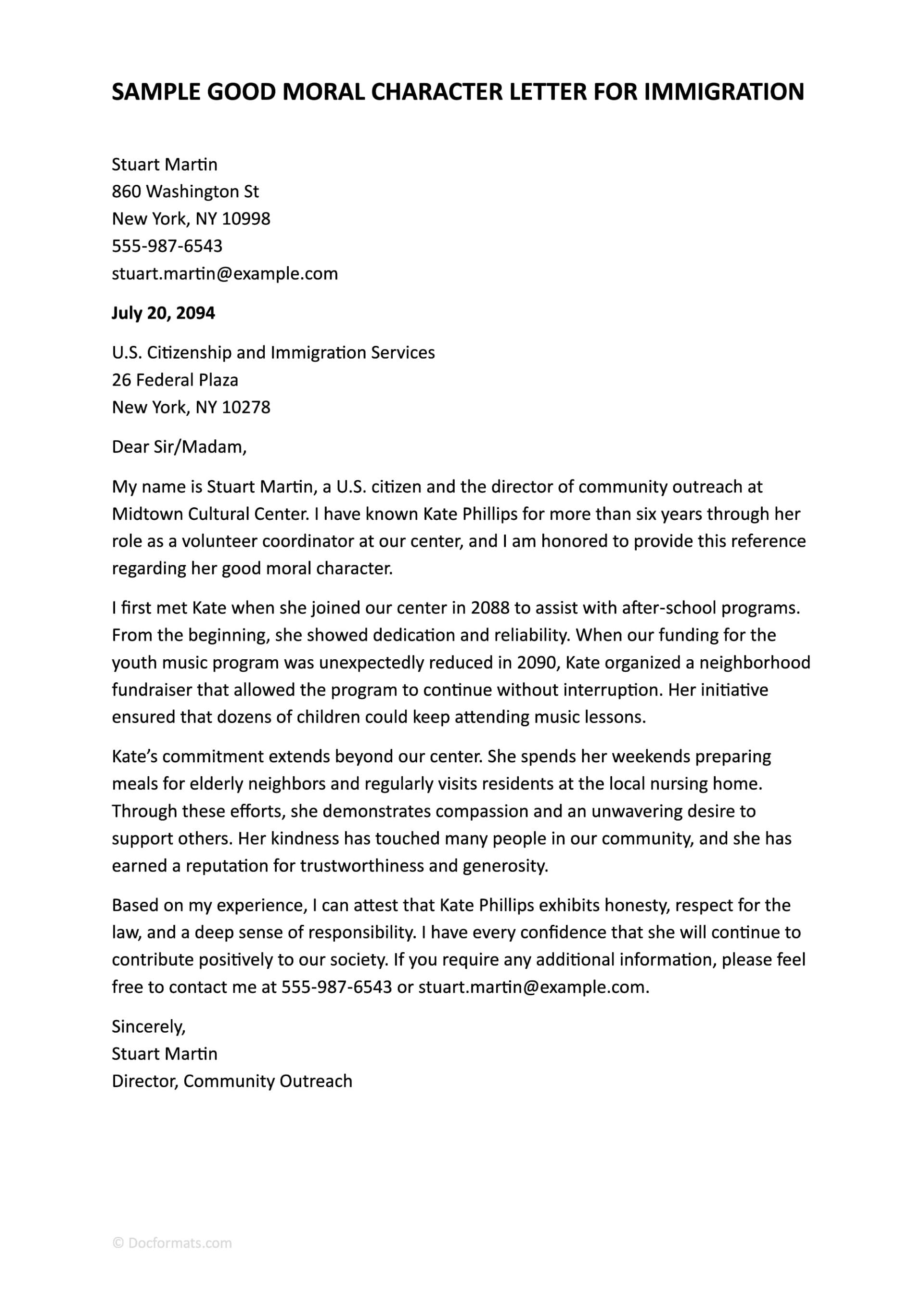
A character reference letter provides an essential glimpse into the personality, values, and attributes of an individual. Typically crafted by those who have shared personal, professional, or academic relationships with the subject—like friends, family, colleagues, or even landlords—this document is more than just a letter. It’s a testament to an individual’s character, underscoring their work ethic, experiences, and the qualities that make them unique.
While a resume or CV gives potential employers a look at your professional journey, a well-written character reference offers a human touch, painting a picture of who you are beyond just the qualifications. Whether you’re hoping to stand out in a job application, secure a rental property, or simply vouch for a dear friend, this article will guide you through the nuances of crafting the perfect character reference letter.
Pro Tip: Seeking a character reference? Choose someone who truly knows you, can highlight your best qualities, and can provide specific anecdotes. Ensure they have all the information they need and always express gratitude with a heartfelt thank-you note afterward.
Character Reference Letters
Character Reference Letter
A Character Reference Letter serves as a testament to a person’s qualities, characteristics, and capabilities, often penned by someone familiar with the individual, such as a friend, colleague, or mentor. It aims to provide an authentic vantage point into the character, skills, and accomplishments of the individual being referred, to assist in validating their suitability for a position, program, or specific endeavor. The example provided in our preceding interaction offers a robust, detailed framework that allows the user to create a tailored, effective letter by simply populating the bracketed sections with relevant personal data and specific instances that highlight the individual’s attributes and achievements. By offering explicit, field-specific cues, it aids the user in crafting a persuasive and authentic letter, all while ensuring that no pivotal information is inadvertently omitted, enhancing the efficacy and credibility of the correspondence. Furthermore, it aids in maintaining a structured, professional format, thereby facilitating a smooth writing process and generating a polished final product.

Character Reference Letter for Court
A Character Reference Letter for Court serves as a testament to an individual’s positive traits and behaviors, intended to provide a more complete picture of their character to judicial figures in legal proceedings. The archetype provided previously furnishes a structured format, complete with pertinent fields and illustrative data, to guide users in crafting a persuasive letter that highlights the subject’s moral fiber, affiliations, and actions. Offering a blend of personal and professional insights into the individual’s life, the model not only underscores key aspects such as the relationship to the defendant, positive attributes, and involvement in the community but also subtly appeals to the emotional and humane side of judicial decision-making. By offering clear brackets for personalization and avoiding a rigid, instructional tone, it encourages users to intertwine authentic narratives with factually accurate information, thereby crafting a letter that is both genuine and compelling.

Tips for Writing a Character Reference Letter
Writing a character reference letter is a significant responsibility, as it can greatly influence the opportunities and prospects for the individual in question. This letter serves as a testament to their character, work ethic, and personal attributes, painting a comprehensive picture that goes beyond resumes and formal applications. To ensure that your letter is both authentic and impactful, follow these detailed tips for crafting a compelling character reference.
- Gather Comprehensive Details: Before you begin writing, request all the necessary information about the purpose of the letter, any specific qualities or experiences they’d like you to highlight, and the details of the application or opportunity they’re pursuing.
- Highlight Specific Qualities: Instead of providing a generic list of positive traits, focus on a select few strong qualities the subject possesses. Back these up with real-life examples or anecdotes, if possible, to add authenticity.
- Maintain Clarity and Conciseness: While it’s important to provide sufficient details, aim to keep the letter concise. Avoid overly complex sentences or jargon. Your goal is to communicate the subject’s qualities as straightforwardly as possible.
- Clarify Your Relationship: Clearly explain your relationship with the subject. Indicate how long you’ve known them and in what capacity. This provides context to the reader about the perspective from which you’re vouching for the subject.
- Tailor the Recommendation: Specifically recommend the subject for the position or opportunity they are seeking. Address how their qualities align with the requirements or expectations of the role or position.
- Proofread Thoroughly: Ensure the letter is free from grammar, spelling, or punctuation errors. Such errors can detract from the letter’s credibility. Consider having another person review it as well, as a fresh set of eyes can often spot overlooked mistakes.
- Include Your Contact Information: At the end of the letter, provide your contact information, including a phone number and email address. This allows the reader to reach out if they have further questions or require clarification.
Character Reference Format
{Date}
{Recipient’s Name}
{Recipient’s Position/Title, if known}
{Recipient’s Company/Organization, if applicable}
{Recipient’s Address}
{City, State, Zip Code}
Subject: Character Reference for {Subject’s Name}
Dear {Mr./Ms./Mrs. Recipient’s Last Name},
I hope this letter finds you well. I am writing to provide a character reference for {Subject’s Name}. I have had the privilege of knowing {Subject’s Name} in my capacity as {his/her} {nature of relationship}, and we have been acquainted for {amount of time}.
Throughout our association, I have been consistently impressed by {Subject’s Name}’s {specific positive attributes, e.g., “dedication, integrity, and teamwork skills”}. At {company/school/residence name}, where {he/she} {works/studies/lives}, {he/she} has garnered respect and admiration from peers and superiors alike.
In my considered opinion, {Subject’s Name} embodies the qualities necessary to excel as an {employee/student/tenant}. I wholeheartedly vouch for {his/her} abilities and character and believe that {he/she} would be an invaluable asset wherever {he/she} goes.
Should you require any additional information or insights about {Subject’s Name}, please do not hesitate to reach out to me directly at {email} or {phone number}.
Thank you for considering my perspective.
Warm regards,
{Your Name}
{Your Position/Title, if applicable}
{Your Company/Organization, if applicable}
{Your Contact Information, if not mentioned earlier}
Sample Character Reference Letter
14 July 2050
Emily Hepburn
123 Main St.
5678 OH, Texas 34000
Subject: Character Reference for Mr. Samuel Kinkaid
Dear Mrs. Hepburn,
I am writing to offer my unequivocal recommendation for Mr. Samuel Kinkaid in relation to his tenancy application. Samuel has been a tenant at one of my properties for the past seven years, beginning from 23 June 2043.
Throughout his tenancy, Samuel has displayed an exemplary sense of responsibility and integrity. He has consistently ensured timely payment of his rent and has maintained the property in an immaculate condition. Additionally, his courteous and friendly demeanor has earned him the admiration and respect of his neighbors.
While it is with a touch of sadness that I bid him farewell as my tenant, I am confident that he will be an asset to any property he chooses to reside in. I wholeheartedly recommend him as a tenant.
For any further queries or details regarding Mr. Kinkaid’s tenancy, please feel free to reach out to me at (500) 345-234-23 or via email at [email protected].
Warm regards,
John Gregory
Owner – Hillwood Properties
Character Reference Letter Samples and Templates
You could be asked to write a reference letter for a friend, family member, employee, or tenant. This could prove tedious and time-consuming. Here are a template and sample to make the process easier.
Character Reference Letter for Court

- MS Word
Character Reference Letter for a Friend

- MS Word
Character Reference Letter for Student

- MS Word
Character Reference Letter for Immigration

- MS Word
Character Reference Letter for Landlord

- MS Word
Character Reference Letter for Coworker

- MS Word
FAQs
Ideally, the writer should be someone who knows the subject well, such as a long-time friend, colleague, former employer, mentor, or community leader. The key is that the person should be able to provide genuine insights into the subject’s character and abilities.
While both types of letters serve to vouch for an individual, a professional reference typically focuses on work-related skills and achievements. In contrast, a character reference provides insights into an individual’s personal qualities and character.
A character reference letter should typically be between one and two pages. It should be long enough to provide genuine insights and specific examples but concise enough to retain the reader’s attention.
It’s essential to remain honest and objective when writing a character reference. Exaggerating or providing false information can harm the subject’s credibility and your own, especially if the reader relies on your letter to make crucial decisions.
Yes, it’s a good practice to provide your contact information, including a phone number and email address. This allows the reader to contact you for any further questions or clarifications.
Absolutely. If you feel uncomfortable, unqualified, or unable to genuinely vouch for someone, it’s better to politely decline the request than to write a letter that may not serve the subject well.
Bottom Line
While a character reference letter adheres to formal conventions, it should resonate with genuine personal insights. It’s essential to outline the nature and duration of your relationship with the subject. Spotlight their notable attributes, skills, and competencies, ensuring your accolades are rooted in truth and experience. Strive for a balance: be sincere in your commendations without veering into hyperbole, ensuring the letter is perceived as both authentic and objective.