
Receipt Templates
A receipt confirms that a payment was received, what it was for, and that the obligation is settled, creating a record both parties can refer to if questions arise later. Templates in this collection cover the common contexts including rent receipts for tenants paying landlords, cash sale receipts for small business transactions, donation receipts for charitable contributions (often used for tax deduction purposes), service payment receipts for one-time or recurring work, refund receipts documenting returned payments, and deposit receipts for partial payments toward larger obligations. Each one includes the standard fields: date and receipt number, payer and payee identification, amount paid and payment method, description of what the payment covered, and signature or stamp where required. Issue numbered receipts and keep copies for the period your tax authority requires.
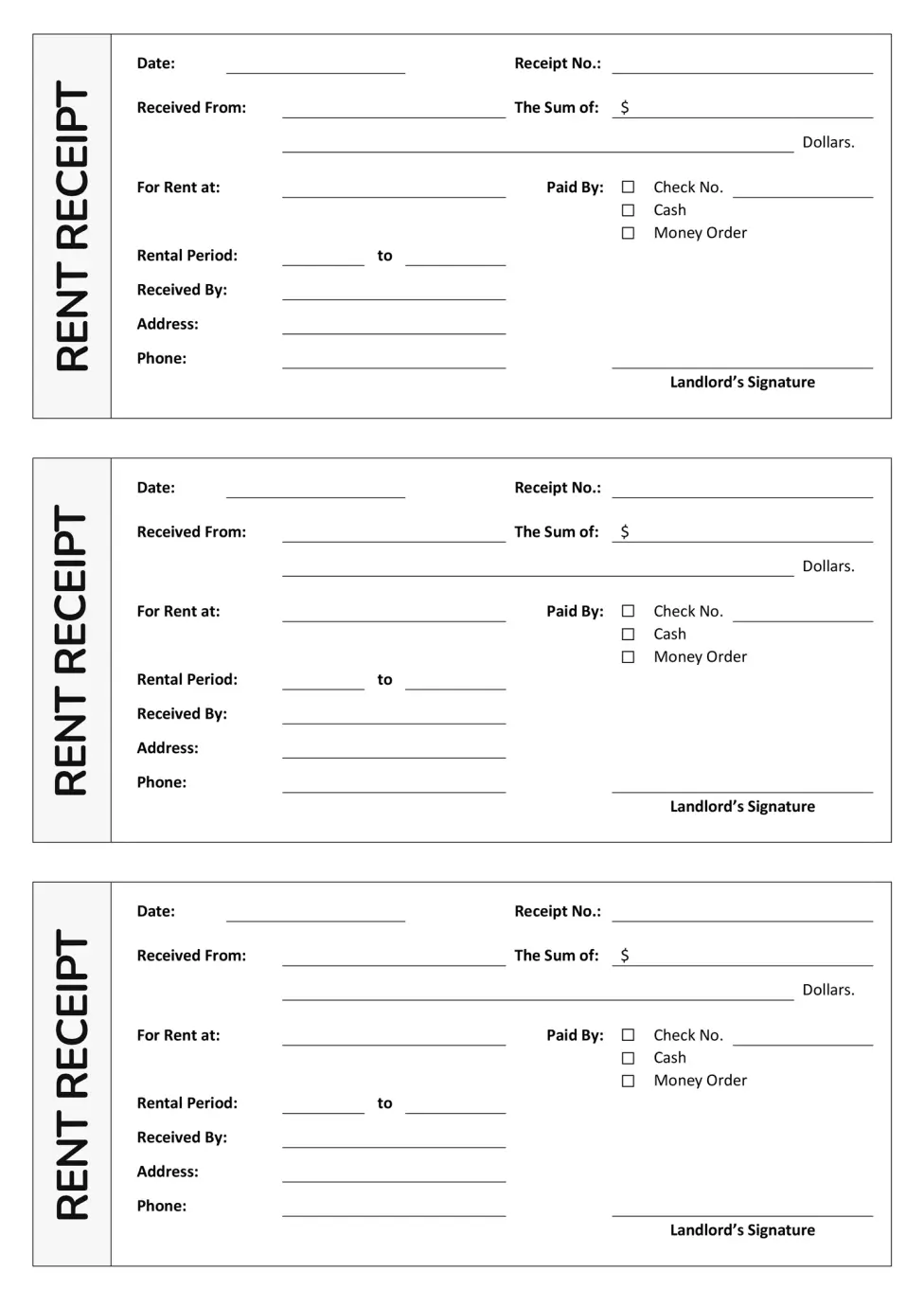


Receipts serve as evidence in three contexts where their absence creates real problems: tax filings where deductions require documentation, business audits where every expense must trace to a supporting receipt, and disputes between buyer and seller about whether a payment was made and for what. The discipline of issuing numbered receipts at the moment of payment, with both parties retaining copies, removes the basis for future disagreements at almost no cost. For businesses, sequential numbering also supports internal reconciliation between receipts issued and cash deposited, which is the first check against errors or theft.
Digital receipts are acceptable to the IRS and most state tax authorities as long as they are legible, complete, and retrievable. Scan or photograph paper receipts as you receive them, since thermal paper fades within a year or two and may be illegible by the time an audit happens three years later. Store digital receipts in folders organised by year and category, with file names that include the date and vendor so the right receipt can be found in seconds. Keep receipts for the period your tax authority requires, typically three to seven years for most expenses and indefinitely for major capital expenditures, real estate, and investment records.