
Rent payments are a routine part of renting, but disputes usually happen over simple details like the date received, the month covered, or whether a cash payment was actually accepted. A rent receipt is a written record that confirms the payment amount, payment method, rental period, and the name of the person who received the money. For landlords, property managers, and rental property owners, consistent receipts also support cleaner bookkeeping and rental income records. For tenants, a signed receipt can be useful for personal records, reimbursement, and situations where proof of payment is requested.
If you collect rent in cash, accept money orders, or manage multiple units, having the same receipt format each time reduces confusion and keeps your files easier to review later. The receipt can also document related charges shown in a lease agreement, including late fees, utilities, and security deposit payments, as long as the receipt clearly states what the payment covers.
Here are some editable rent receipt templates you can fill in, download, and reuse for each rent payment.
Rent Receipt Templates
Blank Rent Receipt Template
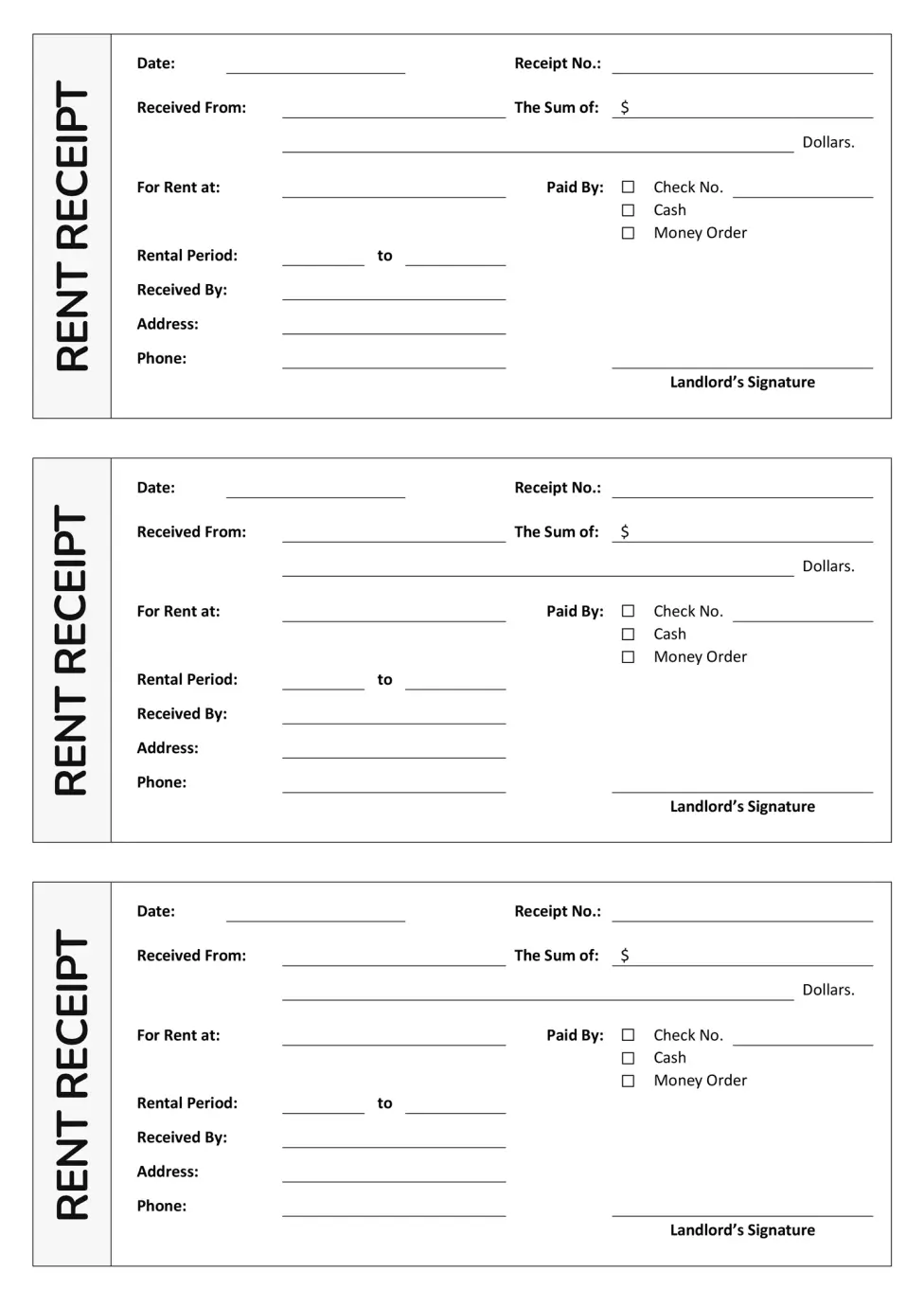
Rent and Deposit Receipt Template

#1

#2

#3

#4

#5
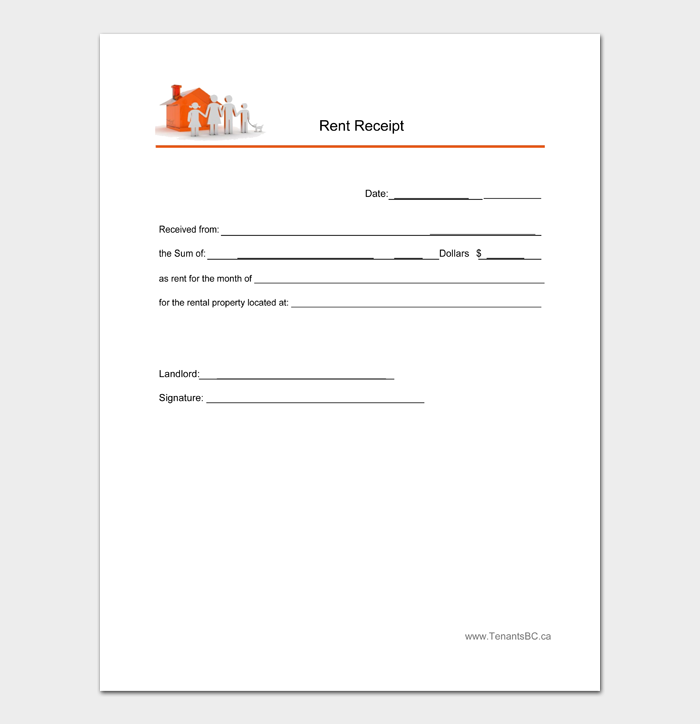
#6

#7

#8

#9

#10

#11

#12

#13

#14

#15

#16

#17

#18

#19

#20

Rent Receipt 01

Rent Receipt 02

Rent Receipt 03

Rent Receipt 04

Rent Receipt 05

Rent Receipt 06

Rent Receipt 07

Rent Receipt 08

Rent Receipt 09

Rent Receipt 10

Rent Receipt Template 11

Rent Receipt Template 12

Rent Receipt Template 13

Rent Receipt Template 14

Rent Receipt Template 15

Rent Receipt Template 16

Rent Receipt Template 17

Rent Receipt Template 18

Rent Receipt Template 19

Rent Receipt Template 20

Rent Paid Receipt 21

What is a Rent Receipt?
A rent receipt is a written acknowledgement that rent was paid and accepted. It records the key facts of the payment so there is less room for disagreement later about the amount, the date received, and the rental period the payment was meant to cover.
This matters most when payments are easy to dispute or misapply. Cash does not leave a built-in trail, and even bank transfers or card payments can be unclear if the memo line is blank, the payment is split across multiple transactions, or the landlord applies the money to a different month or to fees first. A receipt adds a plain record that both sides can point to.
A good rent receipt also reduces confusion when payments are not “one clean monthly payment.” That includes partial payments, late payments, security deposits, utilities, parking, pet rent, or any lease-approved charge paid alongside rent. When the receipt lists what the money covered, the tenant and landlord can match records without guessing.
A rent receipt is not only for disputes. Many tenants keep receipts for personal files, reimbursement requests, or housing assistance documentation. Many landlords keep them for bookkeeping, year-end totals, and a consistent paper trail across units.
What a rent receipt typically confirms
- Payment received the landlord or agent accepted the funds
- Amount paid the exact dollar amount received
- Date received when the payment was accepted
- Rental period covered the month or date range the payment applies to
- What the payment covered rent only or rent plus fees and other charges
How does a Rent Receipt Work?
A rent receipt is created when a payment is accepted, then shared with the tenant, and stored for recordkeeping. The main purpose is to tie one payment to one rental unit and one rental period, so the payment cannot be easily misunderstood later.
The process typically starts when the tenant submits rent through the method agreed in the lease, such as cash, check, money order, bank transfer, or an online rent portal. The landlord, property manager, or authorized agent confirms the payment details, then completes the receipt with the tenant and property information, the amount received, the payment method, and the rental period covered.
If the tenant paid more than rent, the receipt should separate the amounts. For example, it can show rent as one line item and late fees or utilities as separate line items. If the tenant made a partial payment, the receipt should show what the partial amount was applied to and what balance remains.
Next, the person receiving payment signs the receipt. For paper receipts, this is a handwritten signature with a printed name and date. For electronic receipts, this is usually a saved receipt or PDF that includes the receiver’s name, a receipt number, or a portal confirmation that matches your internal records.
Finally, both sides keep a copy. Tenants keep receipts as proof of payment and timing. Landlords keep receipts to match deposits, track balances, and confirm what was credited to which month.
Note:
If someone other than the tenant pays on their behalf, the receipt should name the payer and still connect the payment to the tenant, unit, and rental period. If you use receipt numbers, keep them unique and consistent so past receipts can be found quickly when a question comes up.
Essential Elements of a Rent Receipt Template
A rent receipt is only useful when it answers the questions people argue about later. Who paid, who received the money, what it was applied to, and when it was accepted. A strong template captures those details the same way every time, so it is easy to file, compare, and reference if a payment is questioned months later.
Tenant Identification
Start with the tenant’s name exactly as it appears on the lease. This reduces confusion when multiple people share a unit, when a tenant changes last names, or when a landlord manages several tenants with similar names. If the lease lists more than one tenant, you can include all names or note who made the payment, depending on how your records are kept.
Property and Unit Details
The property address is what ties the receipt to a specific rental. It matters even more for landlords who own multiple rentals or managers who handle several buildings. If the property has units, add the unit number as well. Without it, a receipt can be mistakenly filed under the wrong unit, especially in large apartment communities.
Landlord or Manager Details
The receipt should identify who accepted the payment. That can be the landlord, a property manager, or an authorized agent. Include the name that matches your rental records or the name tenants recognize from lease communication. If rent is collected under a business or property management name, listing that name keeps the receipt consistent with other documentation such as ledgers, notices, and payment portals.
Date the Payment Was Received
This is one of the most important fields on the receipt. Tenants rely on it to show on-time payment. Landlords rely on it to match deposits and track late fees based on lease terms. Use the date the payment was actually accepted, not the date it was written on a check or the date a tenant claims it was sent.
Amount Paid
Write the exact amount received. If the payment is partial, the receipt should still show the amount received as its own line, rather than only showing a balance due. That way, both sides can match the receipt to a deposit, a withdrawal, or a money order stub.
Rental Period Covered
Many disputes happen because a payment is applied to the wrong month. A good receipt states the rental period in plain terms, such as “January 2026 rent” or a specific date range if your lease uses weekly rent. If a tenant is catching up on arrears, the receipt should state which past period the payment was applied to.
Payment Method and Reference Details
The payment method belongs on every receipt, even for online payments. For cash, the method confirms there is no bank trail. For checks and money orders, adding the check number or money order number makes the receipt easier to verify later. For electronic payments, you can include a transaction reference number if your system generates one, but the receipt can still be valid without it.
Itemized Charges When Needed
If the tenant paid more than base rent, the receipt should separate the amounts. Rent should be listed on its own line, then anything extra should be listed separately, such as late fees, utilities, parking, pet rent, or other lease-approved charges. This prevents confusion later when a tenant believes the full payment went to rent but the landlord applied part of it to fees.
Remaining Balance if Any
When the payment does not cover the full amount due, the receipt should state the remaining balance after the payment is applied. This reduces back-and-forth later because the tenant can see the open amount at the time the receipt was issued, rather than finding out weeks later.
Signature and Signed Date
A signature is what turns a receipt into an acknowledgement by the person receiving payment. The receiver should sign and print their name. If you issue receipts electronically, the receipt should still identify the receiver by name or business identity and be saved in a way you can reproduce later if needed.
Receipt Number for Recordkeeping
A receipt number is optional, but it is a practical addition for landlords with multiple units. It gives both sides a quick reference for searching files, matching receipts to deposits, and reviewing payment history during end-of-year accounting.
Why Should You Use a Rent Receipt Template?
A rent receipt template keeps rent documentation consistent, which matters when you issue receipts regularly or manage more than one unit. Instead of rewriting the same details every time, you enter the fixed information once, then update only what changes for each payment, such as the date received, amount paid, rental period covered, and payment method. This reduces small mistakes that can create disputes later, like leaving out the unit number, writing the wrong month, or forgetting to note that a payment included late fees.
A template also makes your records easier to organize. When every receipt follows the same layout, you can file them by unit, month, or tenant and quickly compare a receipt to a bank deposit or a tenant ledger. This becomes even more useful when payments come in different ways, such as cash from one tenant, checks from another, and online payments from others.
If you manage multiple buildings, creating a separate version for each property keeps receipts aligned with that building’s address, manager contact details, and internal tracking. The receipt still looks consistent across your portfolio, but it stays tied to the correct property and unit each time you issue one.
Note: If you issue receipts under a business name or property management company, keeping that name and contact details consistent on every receipt can reduce tenant confusion and supports cleaner bookkeeping.
How to Make Your Rent Receipt Template Look Professional
A professional rent receipt is easy to read, quick to verify, and consistent from one payment to the next. When the layout stays the same and the wording stays factual, it becomes easier to file, compare, and reference later.
Start by grouping information in a predictable order. Keep tenant and property details together, keep payment details together, and keep verification details together. When those sections always appear in the same places, you are less likely to miss a field, and tenants can quickly confirm that the receipt was applied to the correct month and unit.
Next, focus on completeness without adding unnecessary details. A receipt should be specific enough that you can match it to a deposit or ledger entry later. That usually means the rental period covered, amount received, payment method, and receiver identity. Leaving out the rental period is one of the most common causes of confusion because the payment can be credited to the wrong month.
Finally, keep the styling conservative. Use a readable font, consistent spacing, and a simple layout. If you want to add branding, keep it subtle so the receipt still prints well and remains legible.
Note: Avoid adding sensitive personal information on a rent receipt, such as full bank account numbers or Social Security numbers. A receipt is a payment record, not an identity document.
How to Send a Rent Receipt
Sending a rent receipt has two parts. First you complete it accurately. Then you deliver it in a way that matches how the tenant paid and how you normally communicate.
Rental Receipt Preparation
Complete the receipt as soon as you accept payment so the details reflect what actually happened. If you manage multiple units, completing receipts immediately also reduces mix-ups.
Record the date you received the funds, not the date the tenant says they sent them. Add the tenant’s name as it appears on the lease, then include the property address and unit number so the receipt cannot be confused with a different rental. Enter the amount received and clearly state the rental period covered, such as the specific month or a date range for weekly rent.
If the payment includes more than base rent, separate the amounts. Rent should be listed on its own line, then list late fees, utilities, parking, pet rent, or other lease-approved charges as separate line items. If the tenant paid only part of what is due, show the remaining balance after applying the payment.
Finish by recording the payment method. For checks, include the check number. For money orders, include the money order number if available. For electronic payments, add a reference number if your system provides one.
Sign and date the receipt. If you use printed receipts, keep a copy in your records. If you use digital receipts, save a copy in a folder tied to the tenant or unit.
Note: If you accept checks, some landlords issue the receipt after the check clears. If you issue a receipt immediately, keep the wording factual so it reflects “payment received” rather than “funds cleared” if the check has not cleared yet.
Sending The Receipt
Choose the delivery method that fits the payment and your workflow. If rent was paid in person, hand the receipt to the tenant at the time of payment. If rent arrived by mail, a mailed receipt can match that process. If you manage remotely, email or a rent portal confirmation is often the most practical approach because it leaves a clear record of delivery.
Email is most reliable when you send the receipt as a document or saved copy rather than typing the details in the email body. That keeps formatting consistent and makes it easier for both sides to store the record.
Common Ways to Deliver a Rent Receipt
Hand delivery works well for in-person payments, especially cash. The tenant receives proof immediately, and you avoid follow-ups asking for confirmation.
Email works well for remote payments or when you want a timestamped record of delivery. It also makes it easier for tenants to store receipts in the same place as their lease documents.
Mail works well when the tenant prefers paper records or when your lease process already relies on mailed notices. This method can take longer, so it is best used when timing is not urgent.
Note: If you send receipts by email, keep a saved copy in your records. A sent message can be deleted by a recipient, but your copy should remain available.
How to Accept Rent Online
Online rent payments vary by platform, but the recordkeeping idea stays the same. The tenant initiates a payment through a bank transfer, card payment, or rent portal. The money posts to your account, then you confirm the amount and tenant match what you expected.
After you confirm the deposit, issue a rent receipt that states the payment method as electronic payment and includes a reference number if one exists. The receipt still matters because bank records often do not show what month the tenant intended the payment to cover or whether the payment included fees and other charges.
If you use automatic payments, a consistent receipt process still keeps your books cleaner. Some landlords issue a receipt each month. Others provide a periodic statement that summarizes payments. Either way, the key is consistency, so tenants know what to expect and you can audit your own records later.
Things To Keep In Mind When Writing A Rent Receipt
A receipt should stay legible and easy to verify years later. Printed copies usually remain clearer than handwriting that fades, and saved digital copies reduce the risk of loss. If you handwrite receipts, use ink and write clearly.
A template improves accuracy because it prompts the same fields every time. When you document the rental period, payment method, and breakdown of charges consistently, there is less room for disputes about what was paid and what it applied to.
Trackable details make filing easier. If you use receipt numbers, keep them unique and sequential or follow a naming pattern tied to the unit and date. That makes it easier to pull records quickly.
If you include business identification details, keep them consistent. This may include a business name, mailing address, and contact details, depending on your rental setup and bookkeeping needs.
Note:
Local requirements vary. If you manage rentals in multiple cities or states, check local landlord-tenant guidance for any receipt rules tied to cash payments or tenant requests.
FAQs
In the majority of cases, the landlord will prepare and sign the rent receipt; however, in situations where they are unable to or unwilling, renters are encouraged to prepare their receipt showing all of the pertinent information and ask the landlord to sign and date the receipt. A receipt without the landlord’s signature is not considered valid.
If you are paying with cash, it is very important to obtain a receipt; otherwise, there is no record of payment.
Many states have legislation in place requiring landlords to issue receipts. However, there are still many states without these laws in place. Check with your local housing authority to confirm local requirements. If your state offers tax benefits to renters, you will require a rental receipt for the rent paid to substantiate your tax credit claim.
Anytime a tenant pays in cash or provides a check, they should request a rental receipt, and it should be signed by the landlord or the person receiving the payment. Many people are paying their rent online or with automatic deductions from their bank account. The landlord may issue an electronic receipt in these situations, which is a further acknowledgment that the rent was paid on a specific date. In addition, your bank records should be retained to substantiate the paper trail showing funds transferred to your landlord.
Some states have tax credits available for tenants paying rent. The amount of tax credits varies state by state, and they differ in terms of who may benefit:
• Seniors only
• Consumers with disabilities
• Low-income consumers
Check with your state’s guidelines and tax department to assess if tax credits are available and who qualifies.
In addition, many people work at home in the gig economy or are self-employed and use a room in their rental space as an office. Rental costs, utilities, and other expenses may be eligible for expense deductions against your income to reduce the total tax owed. You will need tax receipts for all claimed expenses, including rent. If you use 15% of your home for your home-based business, then 15% of your rent and utilities may be claimed; however, an accountant can assist in this area.
If you do not have a receipt for your rent, the tax department of your state is unlikely to accept your rental claim for tax credits or tax expenses claimed against your income for a home-based business. A rental receipt is a must or a statement from your landlord showing how much rent has been paid over the year.
The rental receipt is a paper record of the financial transaction where you have provided to the landlord cash or a check for your rent. It is not valid unless the receiver signs the receipt acknowledging the funds have been provided. Note: if your check bounces, the receipt is no longer valid, and you may incur penalty fees from the landlord and your bank for a check issued without sufficient funds in your account.
Rent receipts are only valid if all of the required information is filled out and the receipt is signed by the landlord or the person receiving the funds. Landlords with large holdings may also issue an electronic statement at the end of the year reflecting the total sum paid in rent plus any other fees and expenses paid by the tenant. The basic information required on a rental receipt is as follows:
• The date the funds were received
• The full name of the tenant
• Full name of any 3rd party making the payment on behalf of the tenant
• Property manager, landlord, or owner receiving the payment
• Unit number and rental property address
• The payment amount for rent, utilities, and other payments as required in the lease
• Payment method – cash, check, money order, e-transfer
• Rental period covered
• The remaining balance, if any, including late fees
• Print the receipt if processing the receipt on a computer
• Signature and date the receipt was signed
Rental receipts should be kept for at least a year for your records in case any question arises concerning your payments. If your landlord issues a year-end statement, use the receipts to compare the amounts on the statement to ensure you received full credit for all payments, including any extras you may be required to pay as part of your lease agreement.
If you are claiming your rental costs for a tax credit or expenses against home business income, many states and the IRS require receipts to be kept for a minimum of seven years after the date the taxes were filed. They have the authority to audit your tax statement anytime during the seven-year time frame.
California civil codes and tax credits change from time to time. Renters should check with their local housing authority in California for the current regulations.
California Civil Code Section 1499 provides that if a tenant requests a rent receipt for rent paid, the landlord is required to provide a dated and signed receipt. Tenants should keep all their rental receipts and/or canceled checks in the event a dispute arises.
Renters who make less than currently $41,641 for single filers and $83,282 for married filers may be eligible for a tax credit of $60 or $120.
Whether you are in Ontario or another location, there are basic items that must be included on every rental receipt. In addition, landlords and tenants should check with their local housing authority for specific requirements for your location. The details required on a rent receipt include:
• The address of the rental unit
• The name of the tenant(s)
• The date the payment is received
• The amount of the payment
• Indicate what the payment is for – rent, rent deposit, arrears, etc.
• Add the name of the landlord and rental unit
• Signature of the landlord or their agent
If you are missing any of this information, it may be considered invalid. The landlord is obligated to provide a rental receipt at no charge to the tenant. Many landlords prefer to wait until a check has cleared before providing a receipt for the funds received for their protection.
Key Points
Rent payments should be documented the same way you would document any other major expense. If you pay in cash, a rent receipt may be the clearest proof that the landlord accepted the payment, because cash does not create a built-in bank trail. If you pay by check or electronic transfer, your bank records can show money leaving your account, but a receipt still adds clarity about what rental period the payment was applied to and whether any part of the payment covered fees or other charges.
Rules and expectations can differ by location. Some cities and states have specific requirements for when a receipt must be issued, what details it must include, and how tenants can request one. If you manage rentals or you are trying to protect yourself as a tenant, it is worth checking local landlord-tenant guidance so you know what applies where you live.
Receipts can also matter for tax-related documentation in some situations. Certain states have renter credits or assistance programs for qualifying residents, and proof of rent paid may be requested. Rent receipts can also support recordkeeping when someone uses part of their rental home for work or business purposes, since documentation is often needed to back up expenses claimed.
Most disputes are not about complicated issues. They are usually about basic details like the amount paid, the date received, or the month the payment was meant to cover. Issuing a receipt that clearly states the payment amount, payment method, rental period, and who received the money reduces misunderstandings and gives both sides a consistent record to reference later.
Note:
A rent receipt is strongest when it is specific and easy to verify. Listing the rental period covered and separating rent from any arrears, late fees, or utilities can prevent confusion when payments include more than base rent.


