
In today’s fast-paced and competitive professional landscape, maintaining an optimal physical form for work has become a vital aspect of job performance and success. The importance of being in good physical condition transcends the boundaries of physically demanding occupations, as it also plays a significant role in enhancing productivity, focus, and overall well-being in various work environments. Additionally, many employers require a comprehensive employment physical form to ensure that candidates meet the necessary physical requirements for a specific position. This article delves into the concept of physical form for work, exploring its significance, implications, and strategies to maintain and improve it in the context of different professions.
Physical Form for Work (Templates)


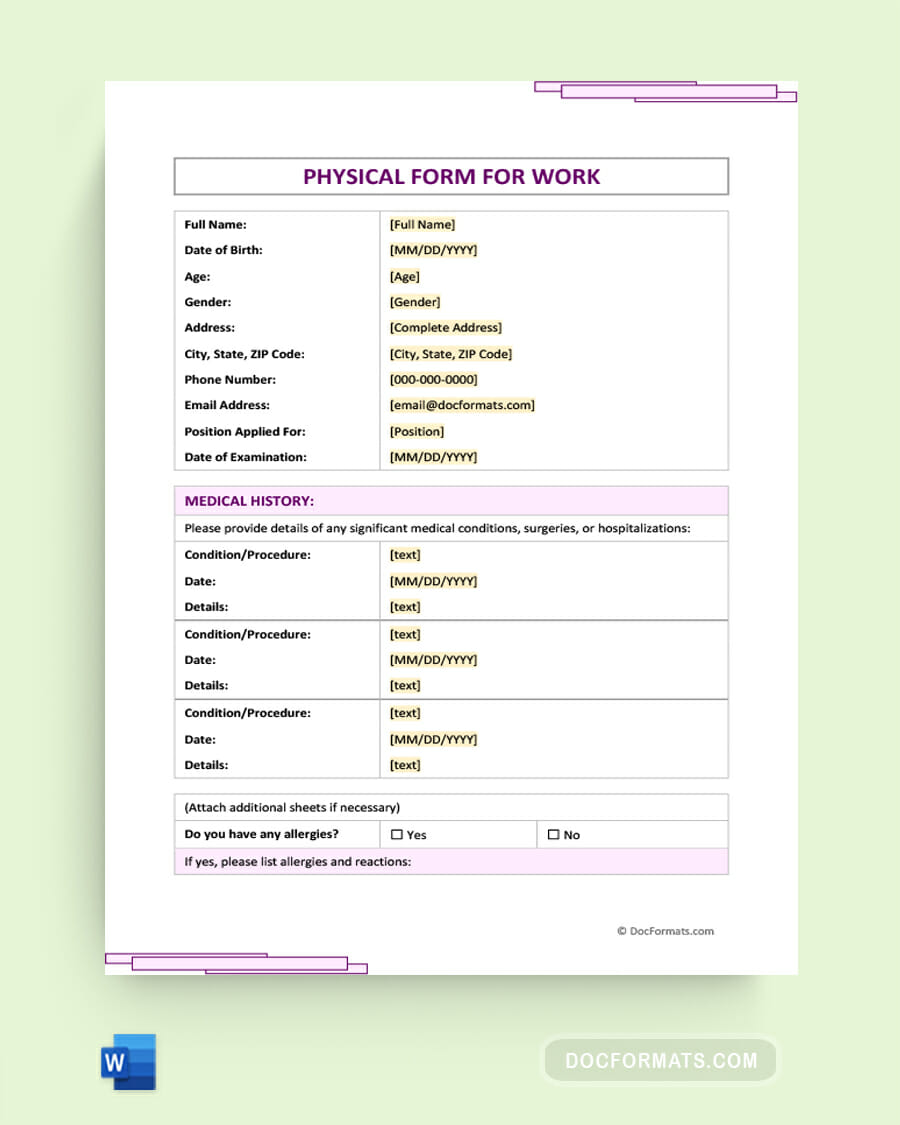


What is a Physical Form for Work?
The term ‘Physical Form for Work’ refers to the physical state or condition in which an individual is required to be in order to perform specific tasks or duties effectively in their professional environment. This can involve meeting certain physical standards, maintaining a level of physical fitness, or possessing specific skills or abilities that are necessary for the job.
The physical form for work is an essential aspect of the overall job performance, as it directly impacts an individual’s capacity to execute their duties and responsibilities. In many professions, maintaining an optimal physical form is not only a matter of efficiency but also one of safety and well-being. For example, firefighters, police officers, and construction workers need to be in good physical condition to ensure they can handle the strenuous nature of their work and reduce the risk of injury.
However, the importance of physical form for work is not limited to physically demanding jobs. Even in office-based roles, being in good physical shape can improve focus, productivity, and overall job satisfaction. A healthy body can support a healthy mind, leading to enhanced performance and reduced risk of work-related health issues, such as repetitive strain injuries or chronic pain.
Why Is Physical Form for Work Important?
The significance of physical form for work cannot be overstated, as it directly affects an individual’s ability to perform tasks efficiently, safely, and effectively. This section highlights some key reasons why maintaining an optimal physical form is crucial in various professional settings.
- Enhances productivity and efficiency: A good physical form enables employees to work at their full potential, thus improving overall productivity and efficiency. When individuals are in good shape, they are less likely to experience fatigue or discomfort, allowing them to focus on their tasks and deliver better results.
- Reduces the risk of injury and accidents: In physically demanding occupations, such as construction, firefighting, or law enforcement, maintaining a good physical form is critical for ensuring the safety of both employees and those around them. A fit body can more effectively handle the rigors of the job, leading to fewer workplace accidents and injuries.
- Supports mental well-being: A strong connection exists between physical health and mental well-being. By staying in good physical shape, employees can enjoy improved mental clarity, better focus, and reduced stress levels, which can positively impact job performance and overall satisfaction.
- Fosters a positive work environment: Employees who are in good physical form often exude confidence and positivity, contributing to a more vibrant and engaging work environment. This can lead to improved teamwork, collaboration, and morale among coworkers.
- Ensures compliance with job requirements: Many employers require candidates to complete an employment physical form, which evaluates their ability to meet the physical demands of a specific job. Maintaining a good physical form helps ensure that employees are in compliance with these requirements, thus avoiding potential conflicts or issues related to job performance.
- Promotes long-term health and wellness: By prioritizing physical form for work, employees are more likely to engage in regular exercise and adopt healthy habits, which can have lasting benefits for their overall health and well-being. This can lead to reduced healthcare costs, improved quality of life, and greater longevity in the workforce.
The importance of physical form for work extends beyond the scope of individual job performance. It also impacts the broader context of workplace safety, employee well-being, and long-term health, making it a crucial aspect of professional life that warrants attention and care.
When Physical Form for Work is Needed?
The importance of physical form for work transcends job titles and industries, as it plays a vital role in ensuring employees can effectively execute their duties and excel in their careers. Here are some key instances when optimal physical form is particularly crucial:
- Physically Demanding Jobs In professions that require manual labor, heavy lifting, or repetitive tasks, maintaining a strong physical form is essential to perform these duties safely and efficiently.
- High-Stress Environments In high-pressure work settings, such as finance, healthcare, or law enforcement, a robust physical form is vital for managing stress, maintaining mental acuity, and preventing burnout.
- Long Work Hours For employees who work extended hours or have irregular schedules, optimal physical form can help sustain energy levels and focus throughout the day.
- Sedentary Professions Individuals in desk-bound jobs can face health risks associated with prolonged sitting. Maintaining physical form is crucial to counteract the negative effects of a sedentary lifestyle.
- Customer-Facing Roles In positions where interaction with clients, customers, or patients is a core responsibility, a strong physical form can enhance interpersonal skills, self-confidence, and the ability to create a positive impression.
- Leadership Positions For those in managerial or leadership roles, optimal physical form can inspire and motivate their team, demonstrating the importance of a healthy lifestyle and its impact on professional success.
- Remote Work Remote workers may face unique challenges in maintaining physical form, as the boundaries between work and personal life can blur. It is crucial for remote employees to prioritize their physical well-being to maintain productivity and job satisfaction.
- Job Transitions When transitioning to a new job or industry, optimal physical form can help individuals adapt to new demands, learn new skills, and successfully navigate the challenges of a career change.
- Aging Workforce As employees age, maintaining physical form becomes increasingly important to ensure they can continue to perform their job duties effectively and remain competitive in the workforce.
- Post-Injury or Illness After recovering from an injury or illness, it is essential to prioritize physical form to regain strength, increase resilience, and return to work with renewed vigor and confidence.
Essential Elements of Physical Form for Work
Achieving optimal physical form for work requires a comprehensive approach that encompasses various aspects of health and well-being. By focusing on these essential elements, employees can build a strong foundation for peak performance in their professional lives.
- Regular Exercise – Incorporating a mix of cardiovascular, strength, and flexibility exercises into one’s routine can help improve overall fitness, increase energy levels, and enhance mental sharpness.
- Balanced Nutrition – A diet rich in whole foods, lean proteins, healthy fats, and a variety of fruits and vegetables provides the necessary nutrients for maintaining physical form and promoting overall health.
- Adequate Sleep – Getting sufficient restorative sleep is crucial for physical recovery, cognitive function, and emotional well-being. Aim for 7-9 hours of quality sleep each night.
- Stress Management – Implementing stress-reduction techniques, such as mindfulness practices, deep breathing exercises, or engaging in hobbies, can help manage stress levels and promote a healthy work-life balance.
- Ergonomics – Ensuring a comfortable and ergonomic workspace can minimize the risk of injury, reduce muscle strain, and promote proper posture, contributing to better physical form.
- Regular Health Checkups – Scheduling routine health screenings and checkups can help identify potential issues early and ensure the maintenance of good physical form.
- Injury Prevention – Taking necessary precautions to prevent work-related injuries, such as using proper lifting techniques, wearing appropriate protective gear, and following safety guidelines, is critical for maintaining physical form.
- Mental Wellness – Caring for one’s mental health, through practices like meditation, seeking therapy, or maintaining social connections, is vital for overall well-being and contributes to a strong physical form.
- Hydration – Staying properly hydrated throughout the day can improve concentration, reduce fatigue, and promote overall health.
- Personalized Approach – Tailoring one’s fitness routine and lifestyle habits to meet individual needs, preferences, and job requirements can help ensure the development and maintenance of an optimal physical form for work.
How to Fill Out a Physical Form for Work
Completing a physical form for work is a vital step in demonstrating that you meet the required physical standards for a specific job. The process often involves a medical examination by a healthcare professional, who evaluates your health status and physical fitness. In this section, we will discuss the steps involved in filling out a physical form for work, ensuring accuracy and compliance with the requirements.
- Obtain the appropriate form: Begin by acquiring the correct physical form for your job or the position you are applying for. Your employer or prospective employer should provide you with the necessary paperwork, which may vary depending on the nature of the work and any applicable regulations or industry standards.
- Review the form carefully: Before filling out the form, take the time to read through it thoroughly, familiarizing yourself with the information required and any specific instructions. This will help you avoid errors and ensure that you provide accurate and complete information.
- Gather necessary documentation: In some cases, you may need to provide additional documentation, such as medical records, immunization history, or proof of previous physical examinations. Gather these documents beforehand to streamline the process and ensure that you have all the required information.
- Schedule an appointment with a healthcare professional: The physical form for work often requires a medical examination conducted by a licensed healthcare provider, such as a physician, nurse practitioner, or physician’s assistant. Schedule an appointment with a qualified professional, informing them of the purpose of the examination and any specific requirements outlined in the form.
- Attend the medical examination: During the appointment, the healthcare professional will assess various aspects of your physical health, including vital signs, vision, hearing, and overall fitness. They may also perform additional tests or evaluations, depending on the job requirements. Be prepared to discuss any relevant medical history or concerns with the examiner.
- Complete the form accurately and legibly: After the examination, the healthcare professional will fill out the corresponding sections of the form, detailing their findings and assessments. They will also indicate whether you meet the physical requirements for the job. Ensure that all the information provided is accurate, legible, and complete before signing the form.
- Submit the form to your employer or prospective employer: Once the physical form is completed and signed by both you and the healthcare professional, submit it to the appropriate party, following any specific instructions or deadlines provided. Keep a copy of the form for your records, as you may need it for future reference or verification.
Physical Form for Work Template
This template is a general outline for a physical form for work and may need to be adjusted to fit specific job requirements or regulations. It is crucial to consult with your employer or prospective employer for the appropriate form or any additional requirements.
Full Name: ______________________________________________________________
Date of Birth: ________________________ Age: _______ Gender: ______________
Address: ________________________________________________________________
City: __________________________ State: _________ Zip Code: ________________
Phone Number: ___________________________ Email: _________________________
Position Applied For: ____________________________________________________
Date of Examination: ______________________
Medical History
Please provide details of any significant medical conditions, surgeries, or hospitalizations:
- Condition/Procedure: ______________
Date: _________ Details: ___________ - Condition/Procedure: ______________
Date: _________ Details: ___________ - Condition/Procedure: ______________
Date: _________ Details: ___________
(Attach additional sheets if necessary)
Do you have any allergies? ( ) Yes ( ) No
If yes, please list allergies and reactions:
- Allergen: ______________________
Reaction: ___________________________ - Allergen: ______________________
Reaction: ___________________________
(Attach additional sheets if necessary)
Are you currently taking any medications? ( ) Yes ( ) No
If yes, please list medications and reasons for use:
- Medication: ____________________
Reason: _____________________________ - Medication: ____________________
Reason: _____________________________
(Attach additional sheets if necessary)
Physical Examination
(To be completed by a licensed healthcare professional)
Height: ___________ Weight: ___________ Blood Pressure: ___________
Pulse: ____________ Respiratory Rate: ____________ Temperature: ________
General Appearance and Observations:
Vision
Right Eye: ___________ Left Eye: ___________ Corrective Lenses: ( ) Yes ( ) No
Hearing
Right Ear: ___________ Left Ear: ___________ Hearing Aids: ( ) Yes ( ) No
Musculoskeletal
Range of Motion: ________________________________________________________
Strength: _______________________________________________________________
Mobility: _______________________________________________________________
Cardiovascular
Heart Sounds: ___________________________________________________________
Peripheral Pulses: _______________________________________________________
Respiratory
Lung Sounds: ___________________________________________________________
Breathing Pattern: _______________________________________________________
Neurological
Reflexes: _______________________________________________________________
Coordination: ___________________________________________________________
Sensation: _____________________________________________________________
Additional Tests or Evaluations (if required)
- Test/Evaluation: _________________
Results: ____________________________ - Test/Evaluation: _________________
Results: ____________________________
(Attach additional sheets if necessary)
Healthcare Professional’s Assessment
Based on the examination, does the applicant meet the physical requirements for the position? ( ) Yes ( ) No
If no, please provide details: __________________________________________
Healthcare Professional’s Name: ________________________________________
Title: ____________________________ License Number: ______________________
Address: _____________________________________________________________
City: __________________________ State: _________ Zip Code: ________________
Phone Number: _________________________ Email: _______________________
Signature: ___________________________ Date: ________________________
Applicant’s Declaration
I, ___________________________, declare that the information provided in this form is true and accurate to the best of my knowledge. I understand that any misrepresentation or omission of facts may result in disqualification from employment or termination if employed.
Applicant’s Signature: ____________________________ Date: ________________
Pre-Employment Physical Exam Requirements
Pre-employment physical exams serve as a means to ensure the health and safety of prospective employees, as well as to ascertain their ability to perform specific job functions. However, these exams must be carried out in a manner that respects the rights of candidates and avoids any form of discrimination. Here are some key guidelines and restrictions regarding pre-employment physical exams:
- Timing of the exam: Employers cannot require a physical exam before extending a conditional job offer. The exam should only be conducted after a candidate has been offered employment, contingent upon passing the examination.
- Uniformity of tests: All conditionally hired applicants must undergo the same tests, ensuring fairness and consistency in the evaluation process.
- Scope of tests: The physical exam may include assessments of physical abilities, mental health, drug and alcohol screening, and psychological evaluations, as appropriate for the position.
- Physical fitness tests: Employers may include a physical fitness test if the job requires a certain level of health and physical fitness to perform the tasks effectively and safely.
- Confidentiality of medical records: Employers must maintain the confidentiality of medical records and store them separately from other employee files.
- Reasonable accommodations: Employers are obligated to provide reasonable accommodations to employees with disabilities, ensuring equal opportunity and access to job functions.
It is crucial for employers to avoid asking candidates certain questions during the hiring process to prevent potential discrimination. Examples of questions that should not be asked include:
- How many days were you sick last year?
- Have you ever been injured on the job?
- Have you ever filed for worker’s compensation?
- Have you received mental health treatment?
- What prescription medications are you taking?
- Do you have a disability that would interfere with your job performance?
- Do you have a heart condition, asthma, or trouble breathing?
Is physical form for work a legal requirement?
While it may not be a legal requirement for all job positions, physical form for work can indeed be a determining factor in the hiring process, especially for roles that necessitate specific physical capabilities. Employers are permitted to require a physical examination, including drug and alcohol tests, as a condition for employment once a job offer has been extended.
It is crucial to note that if an applicant fails these tests or is unable to meet the physical demands of the job, the employer is under no obligation to hire them.
Furthermore, employers must ensure compliance with anti-discrimination laws, particularly regarding applicants with disabilities. If a candidate with a disability is equally or better qualified for the role, they must not be denied employment based on their disability. Additionally, once hired, an employee with a disability cannot be paid less to offset the cost of reasonable accommodations.
FAQs
The frequency of completing an employment printable blank physical form depends on the employer’s policies and job requirements. In some cases, a one-time examination during the pre-employment process may suffice, while other occupations may necessitate periodic re-evaluations, particularly for physically demanding roles or those involving safety-sensitive tasks.
While employers can request medical records or health history in an employment printable blank physical form, they must comply with relevant privacy and anti-discrimination laws. Generally, employers are only permitted to request such information if it is directly related to the job requirements or to assess the applicant’s ability to perform essential job functions.
An employee can refuse to complete an employment physical form, but doing so may have consequences, including the withdrawal of a job offer or disqualification from employment. If an employee has concerns about the form, they should discuss them with the employer or seek legal advice to better understand their rights and obligations.
For minors completing an employment physical form, parental or guardian consent may be required, depending on local regulations and the nature of the job. Additionally, employers should be aware of any specific restrictions or requirements related to hiring minors, such as work permits, hours of work, and prohibited tasks.
If you believe you have been subjected to discrimination during the employment physical form process, you should consult with an attorney or contact the appropriate government agency, such as the U.S. Equal Employment Opportunity Commission (EEOC) or your local equivalent. These agencies can provide guidance on your rights and the appropriate steps to take in filing a complaint
Final Thoughts
the significance of physical form for work extends beyond the individual capabilities of employees and encompasses aspects of workplace safety, productivity, and overall well-being. As such, the use of employment printable blank physical forms serves as a valuable tool for both employers and prospective employees, ensuring that candidates meet the necessary physical requirements for specific job positions. By adhering to legal guidelines and anti-discrimination laws, employers can create a fair and inclusive hiring process that recognizes the importance of physical form in various professions. Ultimately, maintaining a good physical form and understanding its implications will contribute to a more successful and healthier workforce, benefiting both individuals and organizations alike.


