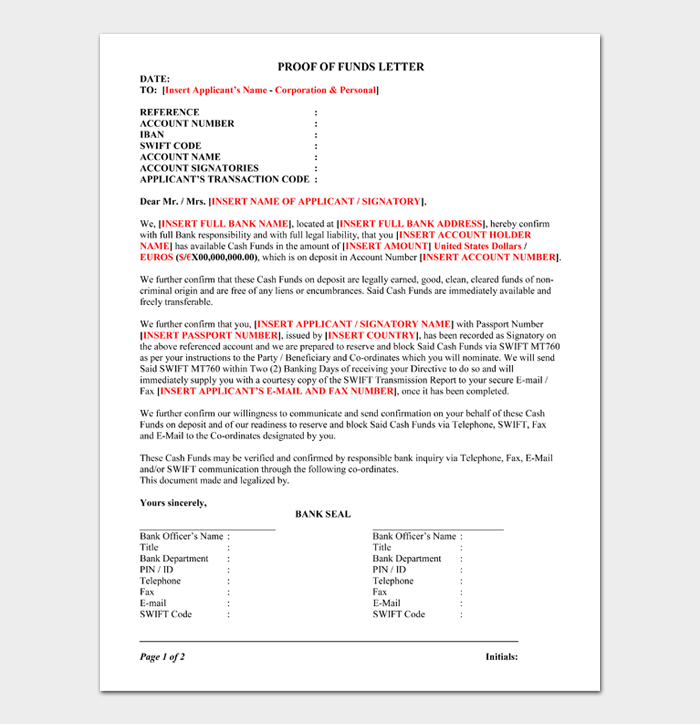
A Proof of Funds Letter is an official financial document certifying that an individual, institution, or corporation has sufficient funds to complete a transaction. Proof of funds letter (POF) is generally required by a seller who needs to verify that the purchasing party is financially capable of producing the funds required to buy from them. These are commonly used to verify that a home-buyer can afford to purchase a home. Home sellers often require this document from potential buyers before they will hold the home while the sale is pending.
Your financial institution will provide a Proof of Funds letter at your request. It may take up to a week for your bank to prepare this document, so plan ahead. You should have this letter available before you make an offer on a home. It is given to the seller either when making the offer or within 36 hours after making an offer.
What is a Proof of Funds Letter?
Proof of funds letter is an official document to the seller showing the buyer has enough liquid assets to cover the purchase and closing costs. The document usually employs a letter format and provides concrete evidence that the buyer can buy the property.
Note: A proof of funds letter is different from a bank account statement or an income statement. Ensure the bank issues you with a POF letter to add legitimacy to your claims to purchase the property.
After presenting a proof of funds letter, the seller can take the home off the market. You only need proof of fund letters for cash purchases of the property.
What to Include in a Proof of Funds Letter
Here is what needs to be included in this financial document:
- Date
- Bank name
- Bank address
- Name of buyer
- The combined amount of available funds from:
- Checking Account
- Savings Account
- Money Market Account
- Signature of the authorized bank employee
- Bank contact information
Important: A Proof of Funds letter is not a pre-approval letter. A pre-approval letter is a lender commitment to provide a loan to a home buyer. A proof of funds letter certifies that the buyer has the financial ability to pay closing costs and a down payment on a home. Buyers need both of these documents when making an offer on a home.
Essential Elements of Proof of Funds Letter
At the minimum, any professional proof of funds letter contains the following:
- Contact details of the client
- Bank’s name and address
- Official bank statement
- Copy of money market statement and balance
- Balance of funds in checking and savings accounts
- Bank certified financial statement
- Copy of an online banking statement
- Signature of an authorized bank employee
- Date statement is made
Writing the Proof of Funds Letters
Follow instructions whether you take the DIY approach or use an online template to write a proof of funds letter. Here are our easy-to-do steps to aid you in writing:
Step 1: Check the accounts
The initial step is to verify whether the client has enough funds in their accounts. Check the savings and checking accounts and obtain the balances of each account.
Step 2: Verify which account to use
For a client with more than one account, check which account they would want to use as POF. You may need to ask the client to consolidate funds into one account if no singular account contains enough funds, but cumulatively all accounts do.
Step 3: Writing the letter
Using your institution’s official form containing the letterhead and the logo, begin drafting the letter. Indicate the client’s full legal name, contact details, and address.
Proceed to jot down the account details and the balance. If the client isn’t the sole account holder, you must specify and include the joint account holder’s details.
Tip: Ask the client beforehand if there is sensitive information they would not wish to be in the letter. Sensitive information may include the account number or the account balance. It is good practice to indicate the available amount to finance the deal.
Remember to provide the date of writing the letter. Ideally, you would want to include the date in a statement in the body of the text, not at the top like you would in a formal letter.
Step 3: Finalize the letter
Attach any supporting documentation to the letter, such as a credit score. Provide your signature as the authorizing bank official. You may also ask the client to sign, although it is unnecessary.
Provide the letter to the client and keep a copy in the bank’s records.
Note: Sometimes, you may need to notarize the letter. Find out if your client wants the additional layer of legality. In most cases, notarization isn’t mandatory.
Proof of Funds Letter Format
{Date}
{Bank Name}
{Bank Address}
{Bank Phone Number}
To whom it may concern:
This letter is to certify that {Buyer Name} has available the sum of {combined funds} as of this date.
If you require further verification or have any questions, please contact us at {Phone Number} or {email Address}.
Sincerely,
{Signature of authorized employee}
{Name of authorized employee}
{Title of authorized employee}
Proof of Funds (POF) Letter: Sample
January 24, 2028
Superior Banking Services
2000 West E Street
Maples, MI 39446
(924) 678-2445
To whom it may concern:
This letter is to certify that Dianna Hines has available the sum of $24,698.00 as of this date.
If you require further verification or have any questions, please contact us at (924) 678-2445, ext. 268 or jonesadam @ superiorbank . com.
Sincerely,
Adam Jones
Adam Jones
Account Manager, Superior Banking Services
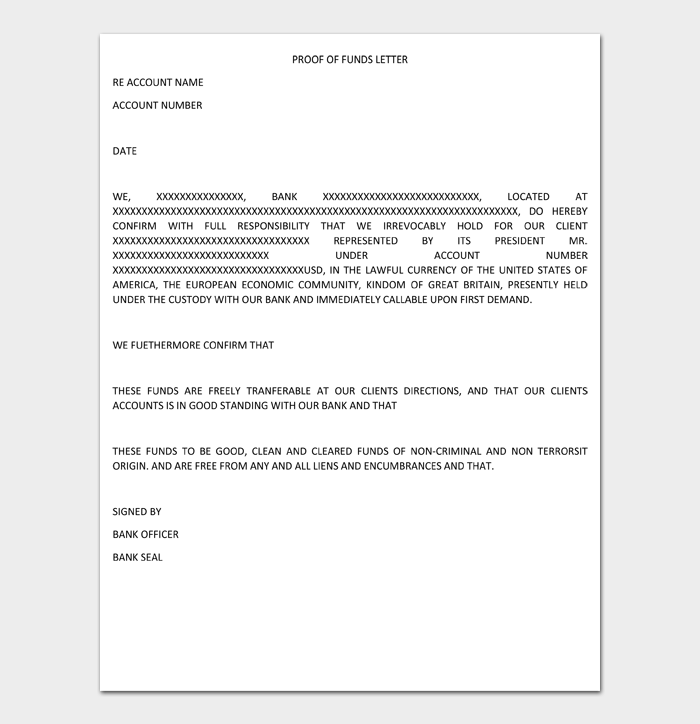
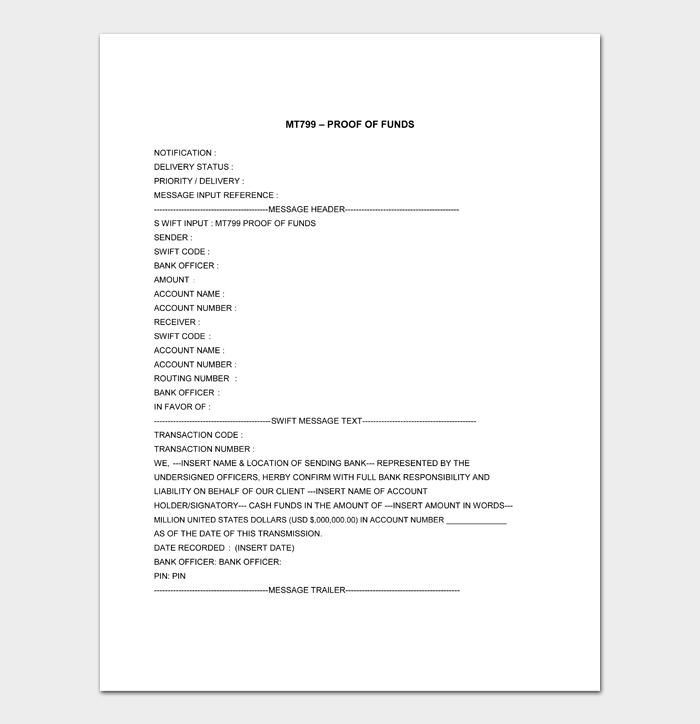
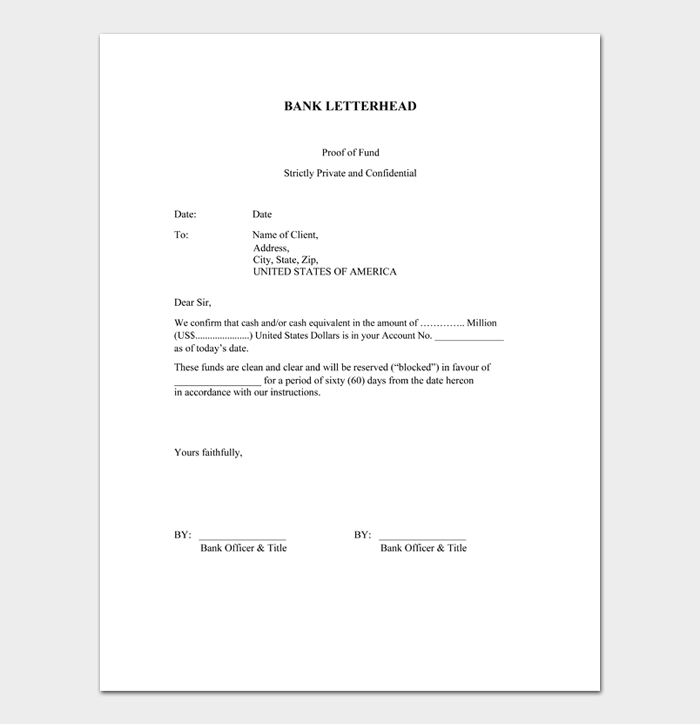
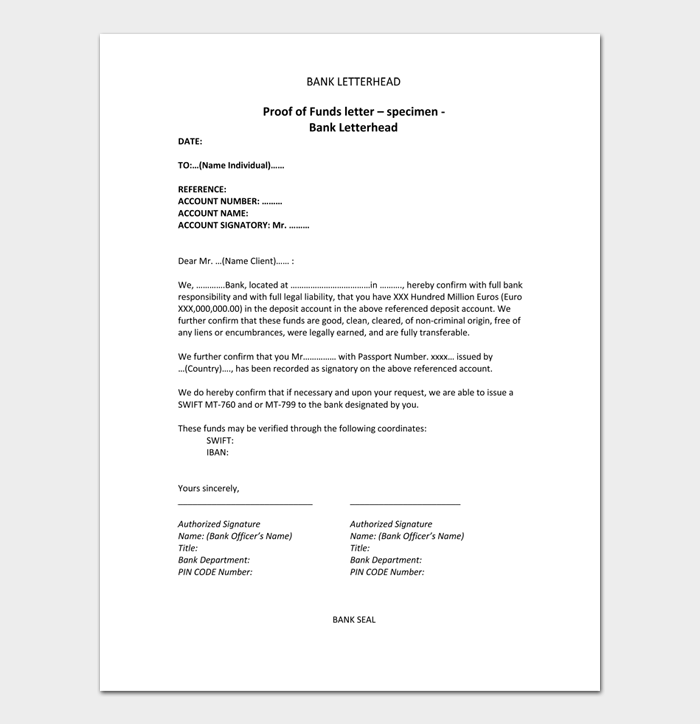
Proof of Funds (POF) Letter Examples & Templates
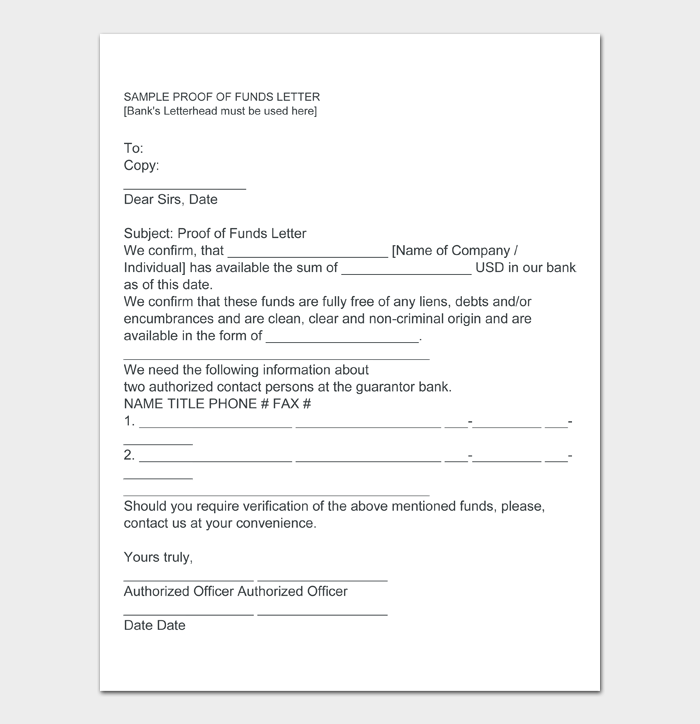
Every bank needs a basic format for providing proof of funds documentation. Using a consistent format ensures quality control over the documents, your bank or financial institution provides its customers. The format above and the sample letter demonstrating its use are freely available for you to adapt and modify. They can help you produce official documents easily and efficiently.
Instant Proof of Funds Letter

- MS Word
Commercial Proof of Funds Letter

- MS Word
Proof of Funds Letter from Bank

- MS Word
Proof of Funds Letter from Private Lender

- MS Word
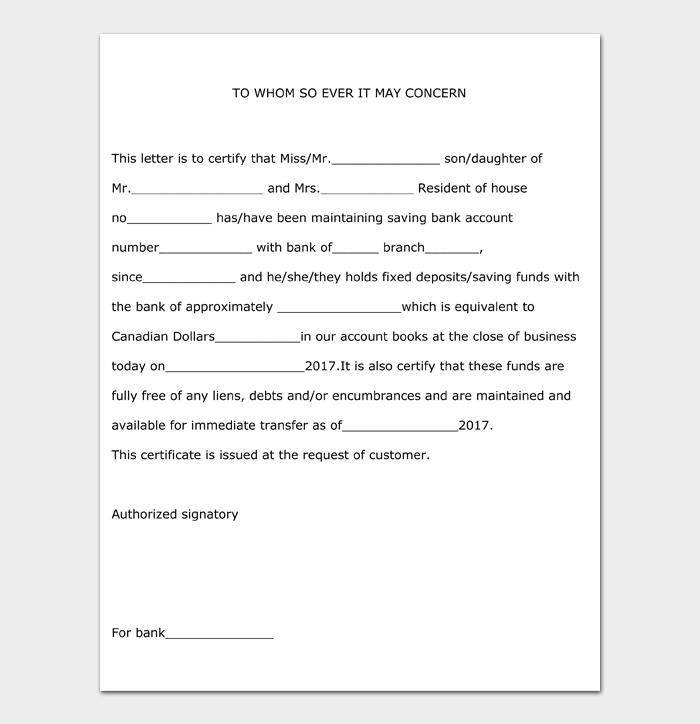


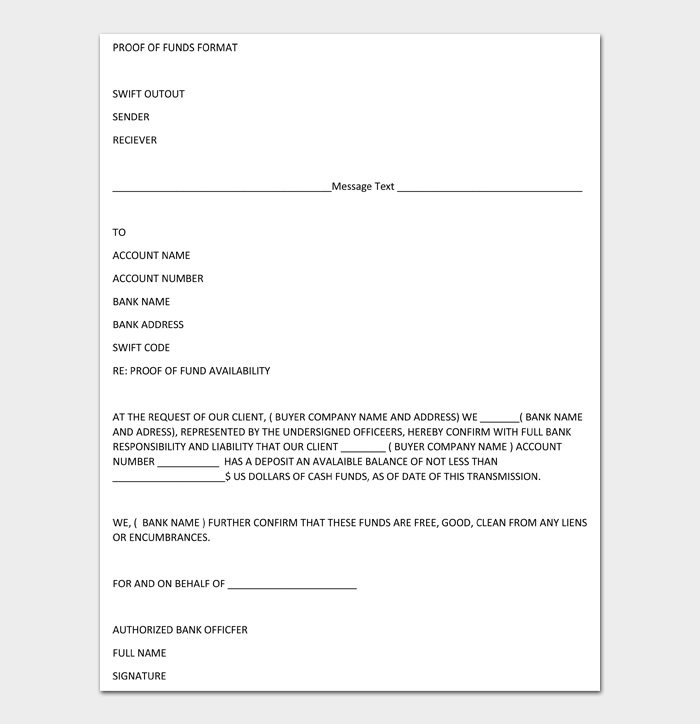
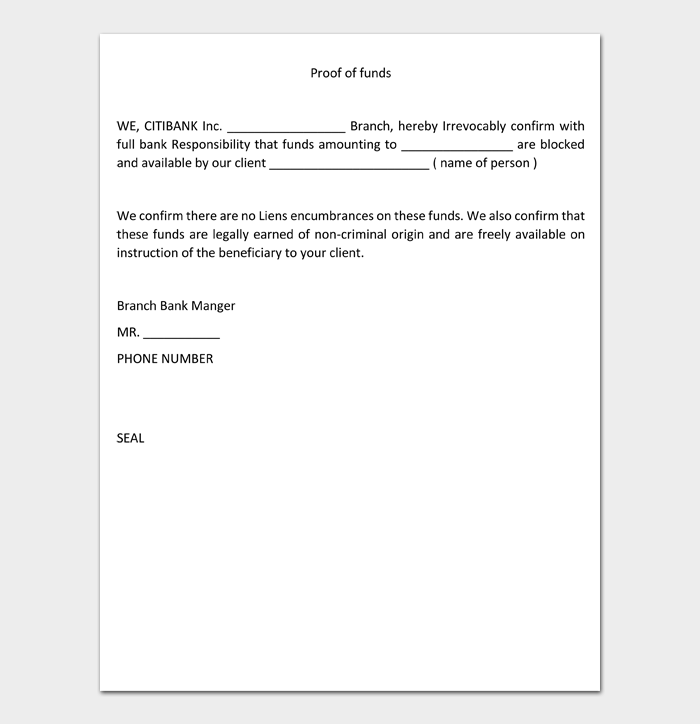



Types of Proof of Funds Letters
Proof of letters differs from basic bank statements. However, some sellers accept bank statements as proof of funds. But to ensure your POF letter cuts across the entire real estate sector, there are specific types you can use to provide legitimate evidence of your ability to buy the house.
Common types of proof of funds letters are:
Bank comfort letter
A bank comfort letter showing proof of funds is a document showing an institution’s ability and readiness to fund the transaction. A CPA usually issues the letter to the buyer to provide for the third party, who is the seller.
The letter will contain bank statements and other proofs of funds that show the firm has enough liquid assets to cover the down payment and other closing costs such as escrow.
Reserved funds letter
A reserved funds letter or a blocked funds letter is a proof of funds letter from a bank or financial institution showing reserved funds for a particular transaction. Once the funds are blocked, the account holder cannot use the funds.
Usually, the funds are reserved for high-end deals, but you can specify the use yourself.
Bank readiness letter
Banks or other financial institutions can show readiness and ability to finance a real estate purchase by using a bank readiness letter. The major merit of a bank readiness letter is that you can send it bank to bank.
Verification of deposit letter
A verification of deposit letter is a document issued by the bank to show the client has enough funds in the account to facilitate a purchase. The letter contains details of the account holder that show they can fund the real estate purchase and may also include credit scores. The bank can send the letter directly to the seller or provide a copy to the client.
Common Mistakes to Avoid
Writing Illiquid assets
A POF should only have liquid assets such as bank deposits and money market funds balance. It does not matter how fast you can sell your car. That won’t count as a liquid asset even though you can readily convert it to cash.
Mentioning paying via cash
Even though it is a cash transaction, it does not mean you’ll pay using physical cash bills. Record only the liquid assets but note you may pay via wired transfer or bank to bank transfer.
What you are doing is financing a deal. Ensure you have enough funds in the account before obtaining a POF.
Tips for Building Your Funds for a POF
Consolidate funds
Consolidate funds from different accounts into one. Having one account with all the funds will prevent the bank from disclosing information about different accounts.
Liquidate some assets
If you have Illiquid assets, liquidate and deposit the money in an account. Remember, POFs only record liquid assets.
Borrow loans using pension
If you have landed your ideal home, Bowwow a loan using your pension plan and deposit the money in a money market fund or savings account. It will collect interest before closing the real estate deal.
Open a savings account
Open a savings account and religiously build up your savings to meet the price of the property you intend to buy. The savings account will accumulate interest and simplify consolidating funds for providing a proof of funds letter.
Sell your current house
If your current house is part of the funds you intend to purchase a real estate or another house, it may be wise to sell it. Find an affordable place to rent during the sale. Also, you can have a realtor accelerate the selling process for you.
Revise your inventory
Since you will be moving to a new house, you may not need all the old stuff from the previous home. Take inventory of the things you don’t need and list them on eBay or auction them to raise extra cash.
Borrow money
You can try to borrow money from colleagues and family members. Your circle may offer you loans with no interest or negligible interest and unsecured as well. Deposit that money into an account you intend to use as a POF. Remember to repay them to maintain trust and friendship.
FAQs
Liquid assets meet the threshold of proof of funds for real estate purchases. However, mutual bonds and bonds aren’t part of POFs. The acceptable POFs are account balances and money market funds balances.
Approach a bank attendant and state the intent of the POF. Importantly state the timeline for the POF letter. The bank agent will draft a letter and send it to the seller on your behalf.
Use a POF to prove you have liquid assets to finance the purchase. The letter will contain the account balances that show you have enough money.
Sellers ask for POFs to take the house off the market. The letter provides concrete evidence that the buyer has enough funds to purchase the property.
Outlook
Real estate sellers need legitimate evidence of your ability to purchase a property. Proof of funds letters are the most useful documents to substantiate the buyer’s ability to pay cash for the property. It is imperative to note that POFs are only viable for cash transactions and record only liquid assets.