
A letter of support for immigration is a written statement provided by someone who knows the applicant either personally through family or friendship or professionally through work or shared activities. It explains the applicant’s character and background through real-life examples that reflect their values, sense of responsibility, and contribution to those around them. These letters are often used in immigration cases including visa requests, green card applications, and deportation defense. They are usually written by someone who knows the applicant well, such as a family member, friend, employer, teacher, or community member.
Free Templates
The following immigration letter of support templates include two versions of each letter. The first is a customizable template with placeholder fields for you to replace. The second is a completed sample written in a realistic tone to show how a finalized version might read.
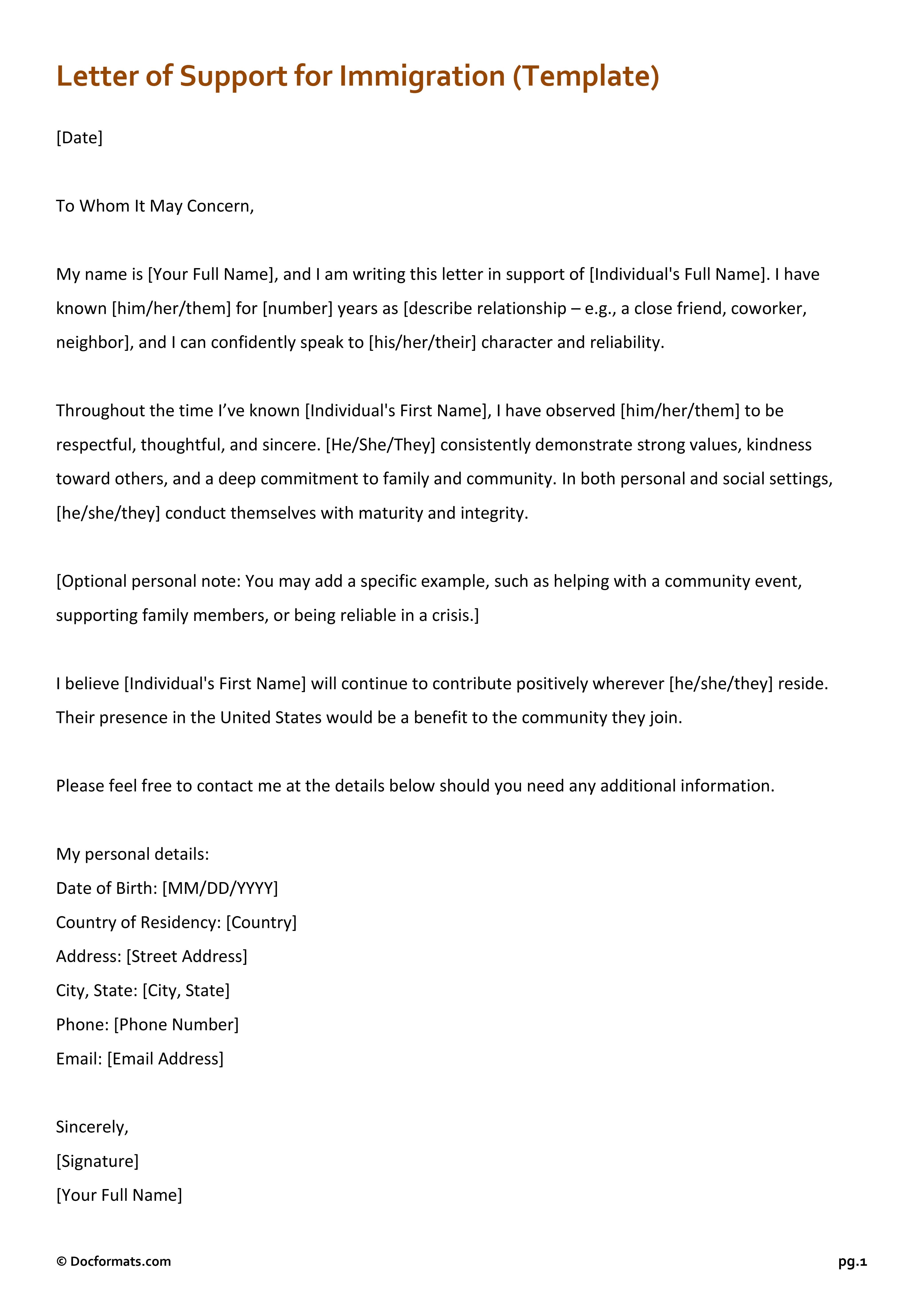
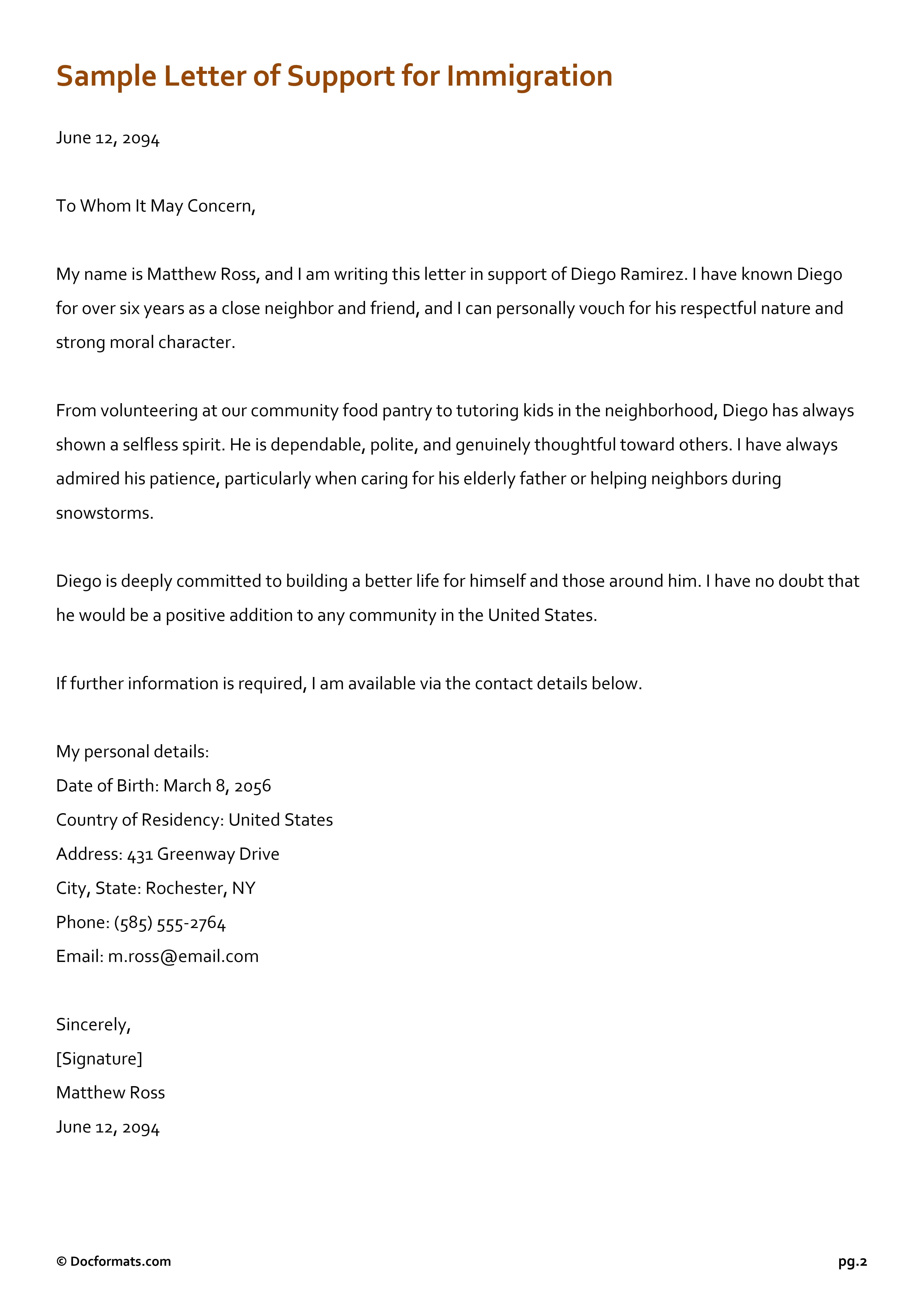
Immigration Letter of Support
This general letter can be written by anyone with a close firsthand connection to the applicant such as a friend, coworker, neighbor, or community member. It’s used in a wide range of immigration cases to affirm the applicant’s values, consistent behavior, and personal background. When writing this letter share specific observations or situations that reflect the applicant’s dependability, kindness, or sense of responsibility. The content should stay grounded in real-life experience and avoid formal legal arguments. This type of letter is especially useful when additional references are needed beyond family or employer statements.
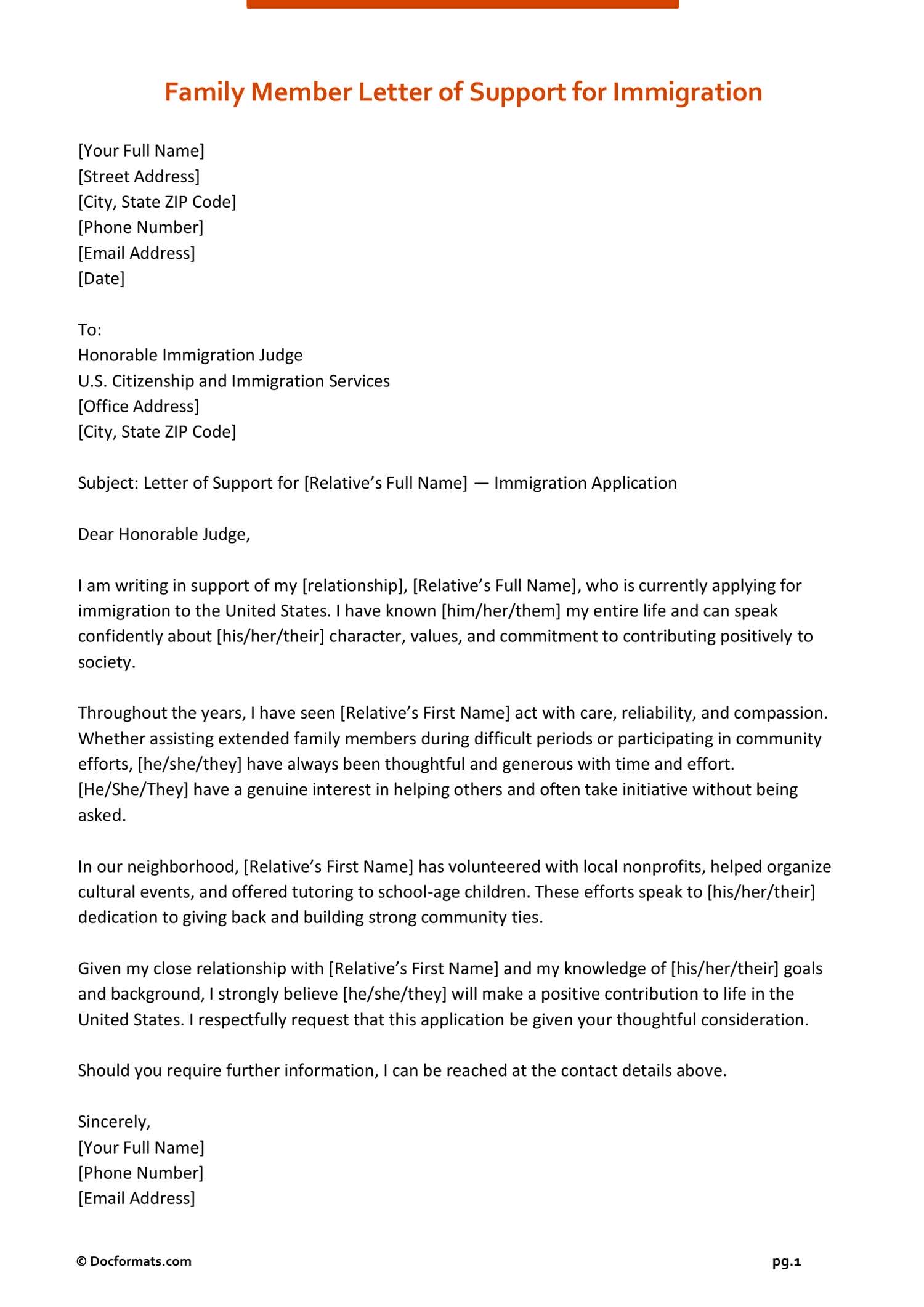
Immigration Reference Letter for a Family Member
This type of letter is written by a close relative such as a sibling, cousin, aunt, or grandparent who knows the applicant well. It is often submitted with immigration petitions to show the applicant’s moral character, long-term family bonds, and positive role in the lives of others. A strong letter includes specific examples of the applicant’s actions such as supporting relatives during difficult times, participating in community activities, or taking responsibility within the household. Focus on details you’ve personally observed. Avoid legal language or emotional exaggeration; this letter should reflect sincere, everyday experiences that demonstrate reliability, compassion, and commitment to family.

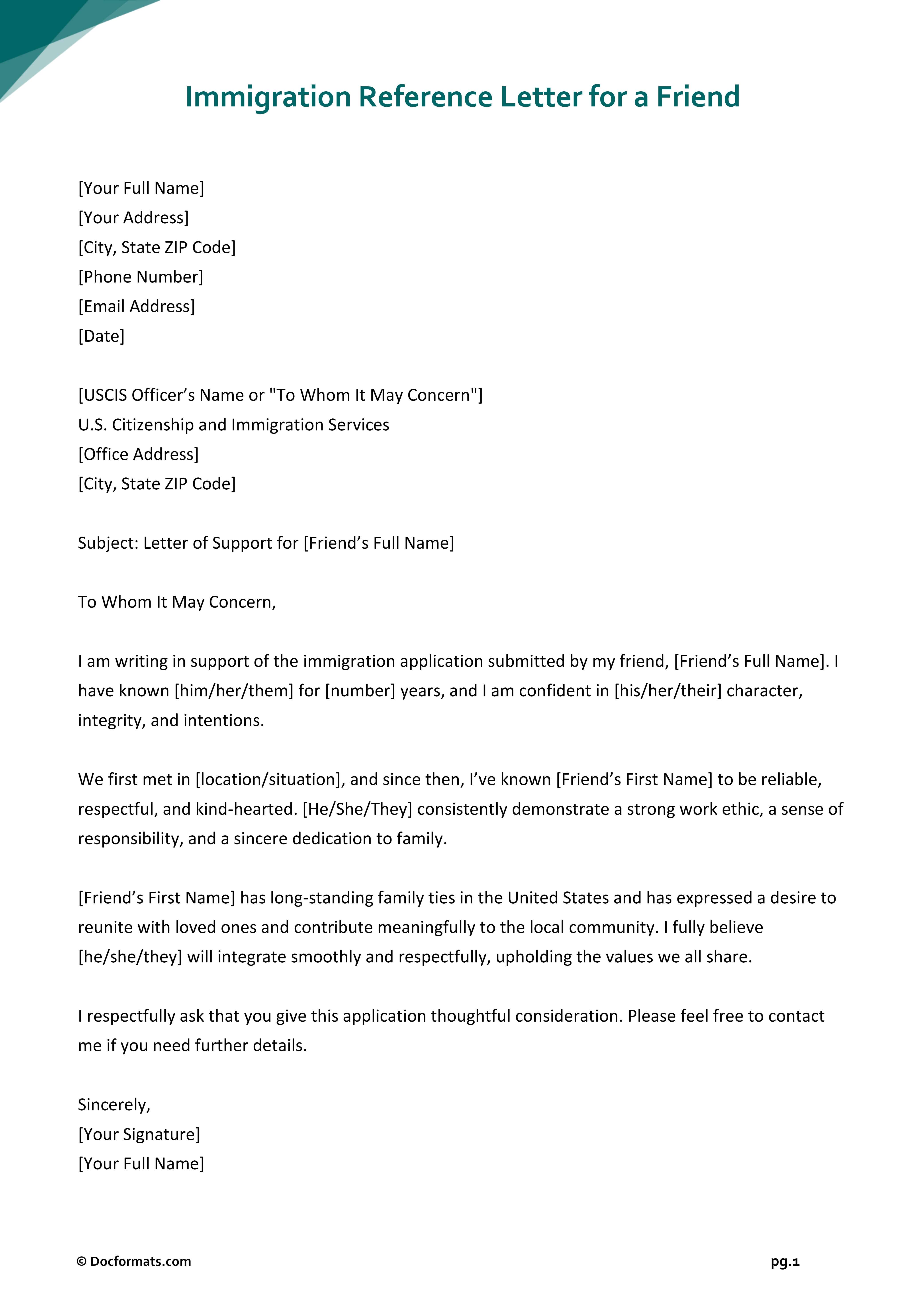
Immigration Reference Letter for a Friend
This type of letter is written by a close personal friend who can speak to the applicant’s values, behavior, and long-term intentions. Unlike a family member, the writer often highlights shared experiences, community involvement, or workplace interactions that reflect the applicant’s character and commitment to others. A strong letter describes how the friendship began, how the relationship developed over time, and what the writer has personally observed such as their dependability, integrity, or role as a parent or community member. It’s especially useful when the applicant has lived abroad or is seeking to reunite with family in the U.S. through legal channels.

Letter of Support for Immigration Marriage
This letter is written by someone who knows both spouses personally and can speak to the authenticity of their relationship. It is often included in marriage-based green card applications to show that the couple shares a real, committed partnership not one formed solely for immigration purposes. The writer should describe how long they’ve known the couple, how the relationship has grown, and what they’ve personally witnessed such as shared living arrangements, long-term plans, or involvement in each other’s families and community. Brief anecdotes can strengthen the letter, especially if they reflect emotional closeness, mutual support, or the couple’s day-to-day dynamic.

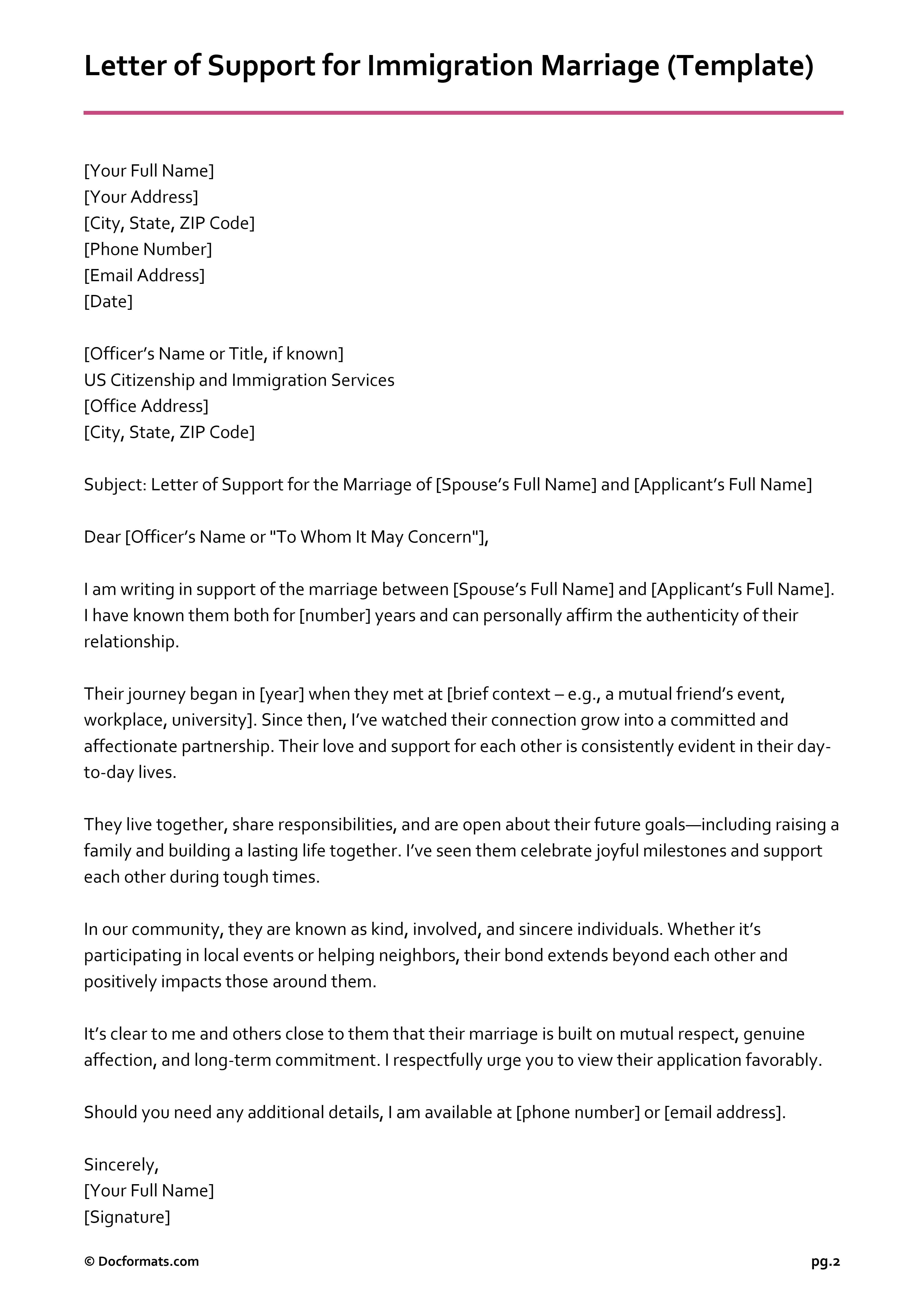
Employer Reference Letter for Immigration
This letter is written by a direct supervisor, manager, or business owner to confirm an employee’s job role, work ethic, and professional contributions. It is typically included in employment-based immigration petitions or used as additional evidence of stability, skill level, or community value in family-based or humanitarian applications. The content should describe the nature of the working relationship, the employee’s strengths, and specific accomplishments that reflect reliability and expertise. It’s recommended to include examples of collaboration, leadership, or technical skills. While the tone remains professional, the letter should show genuine support and a clear understanding of the applicant’s impact in the workplace.

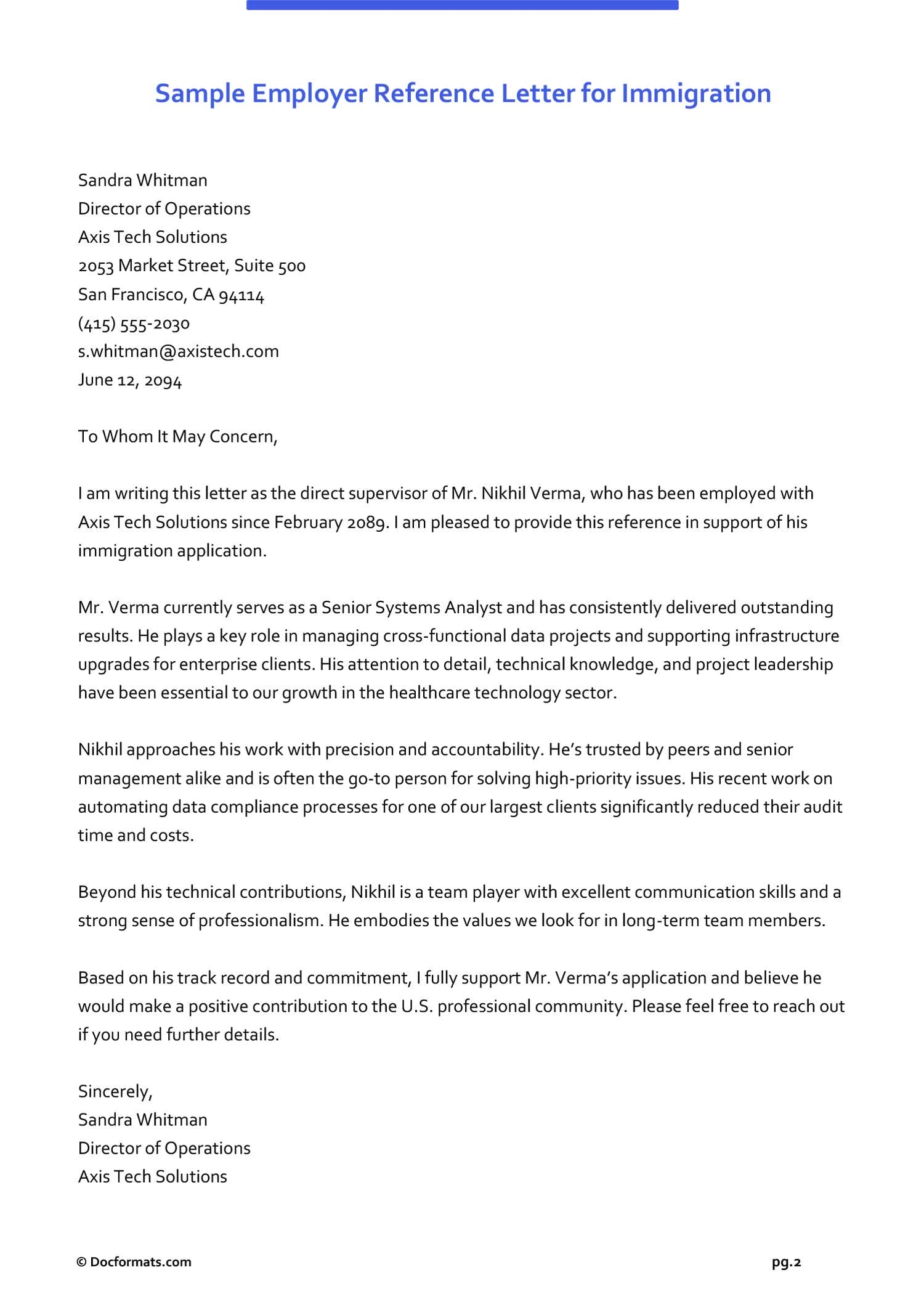
Character Reference Letter for Immigration
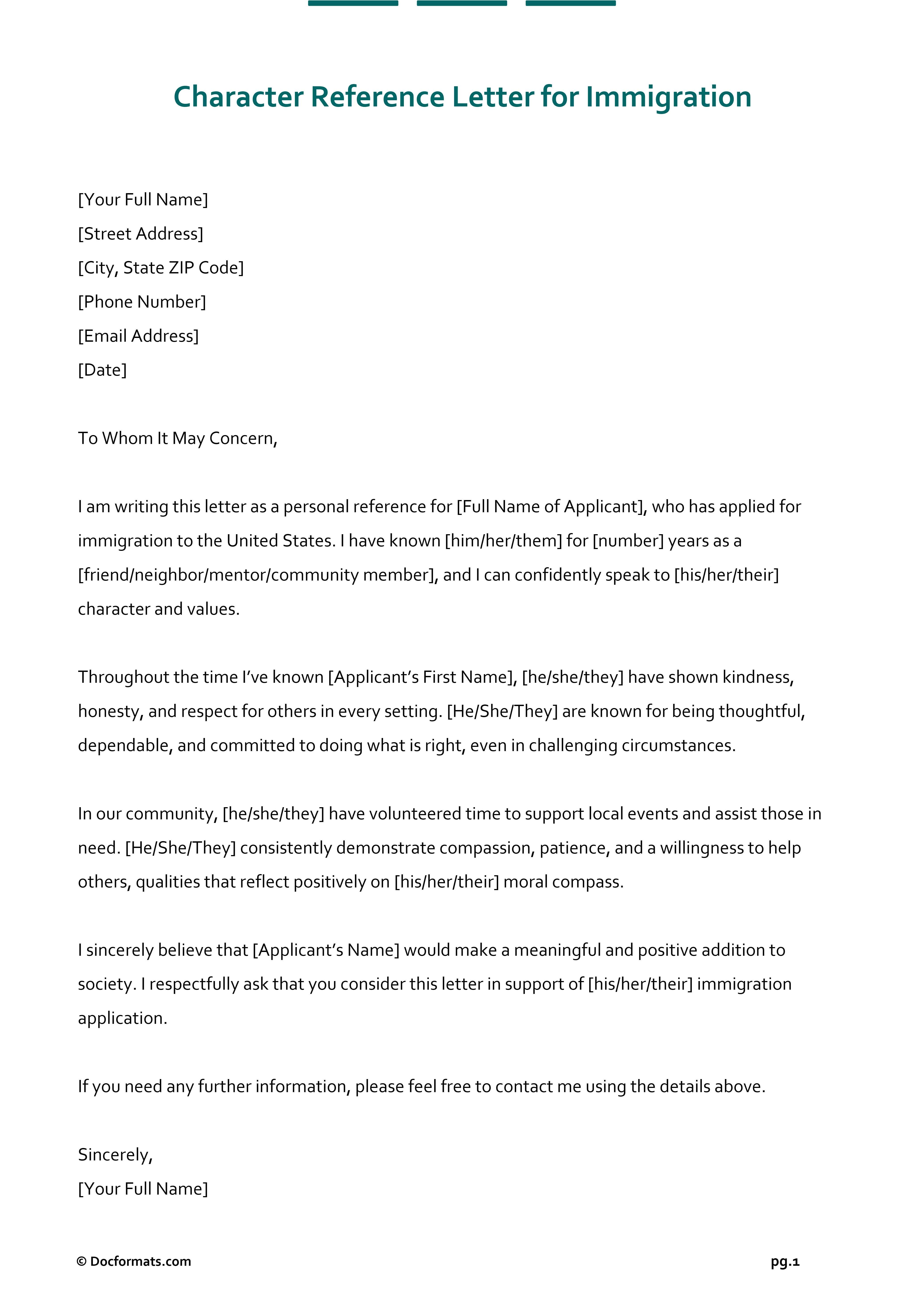
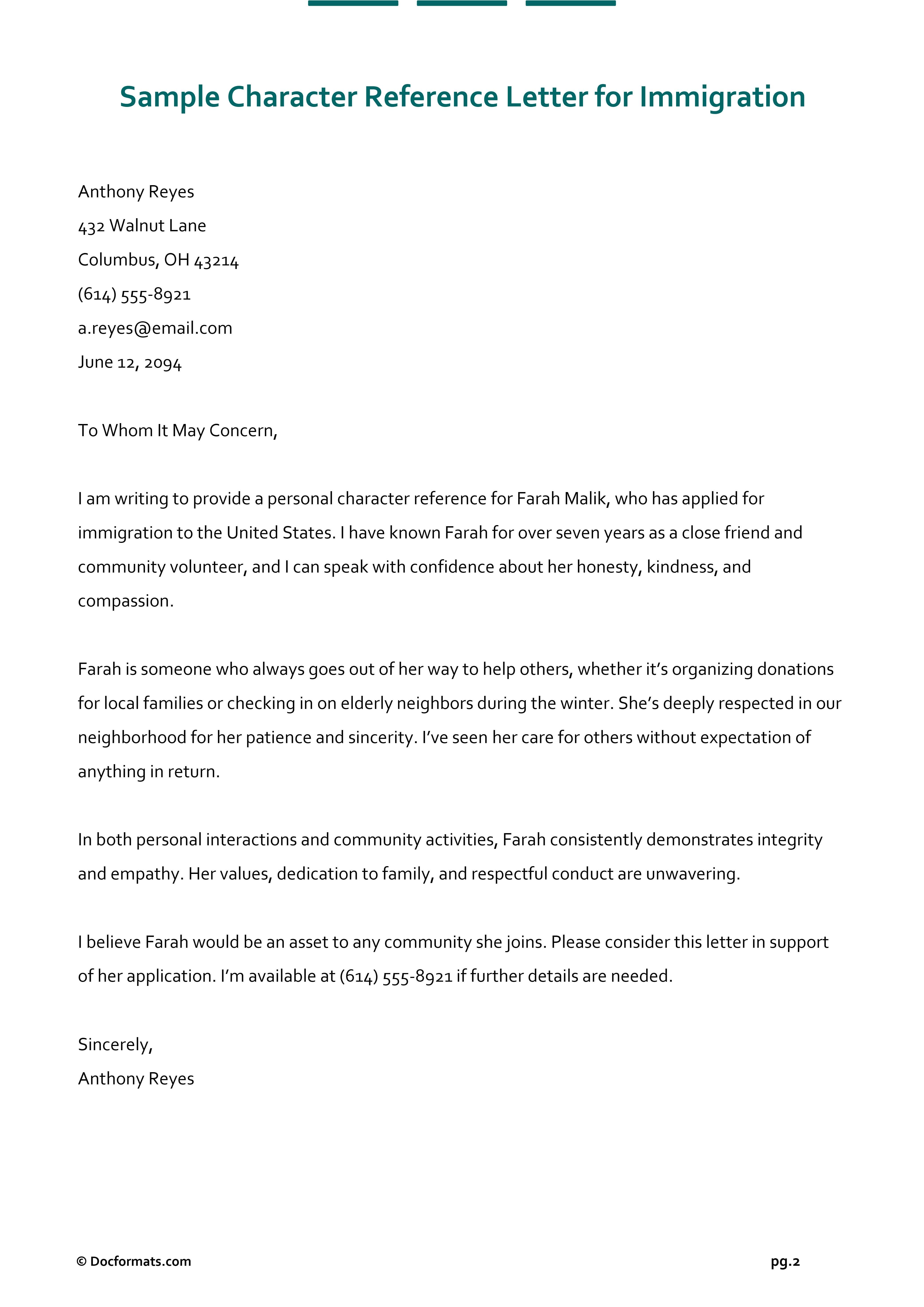
This type of letter is written by someone who knows the applicant well and can speak to their personal qualities, conduct, and moral character. It is commonly used in immigration cases where credibility and behavior are key factors such as waiver requests, adjustment of status, or removal proceedings. Writers should focus on consistent, everyday behavior that reflects trustworthiness, compassion, or a strong sense of community. Unlike job references or legal statements, this letter is based on personal interactions and observed values over time. It’s important to avoid exaggerated praise or formal legal claims; real examples and honest impressions are more effective.
Who Should Write the Letter
The most effective letter comes from someone with a strong, direct relationship to the applicant and firsthand experience of their character and daily life. Before writing, ask yourself whether you’ve personally observed the applicant’s behavior over time and can speak honestly about their values, actions, and impact. Immigration officers rely on the credibility of the writer, so it’s important that the relationship is genuine and not distant or based on secondhand impressions.
How to Write a Letter of Support for Immigration
Writing a letter of support for an immigration case involves more than simply expressing good intentions. The letter should be focused, specific, and grounded in what you’ve personally observed. This guide explains how to write a formal letter that speaks to the applicant’s character, values, and role in their family, workplace, or community based on your direct experience. The steps below will walk you through what to include, how to phrase it, and where to focus.
Use a Formal Format and Tone
Start the letter using a clean, professional format. Use plain white paper or a digital document with standard margins and a legible font such as Times New Roman, Arial, or Calibri in 11- or 12-point size. Keep the spacing single or 1.15, and avoid decorative styles or colors.
Keep the tone respectful and formal. Avoid contractions (e.g., write “I am” instead of “I’m”) and write in full sentences using clear, direct language. Paragraphs should be left-aligned with a space between each one.
Add Required Header Details
Before writing the body of the letter, include your contact information and the recipient’s details at the top of the page. This will help the reader identify the writer and make the letter easier to verify.
Include the following:
- Your full name, address, phone number, and email
- The date you’re writing the letter
- The recipient’s title and office address (if known). If unknown, use “To Whom It May Concern”
- A subject line that references the applicant (e.g., Subject: Letter of Support for Ms. Kate Phillips)
Example:
June 14, 2094
To Whom It May Concern
U.S. Citizenship and Immigration Services
Subject: Letter of Support for Ms. Kate Phillips
Introduce Yourself and Explain Your Relationship
Start the body of the letter by introducing who you are and how you know the applicant. Immigration officers need to understand the nature and depth of your connection to the person; this will establish the credibility of what follows.
In this section, include:
- Your full name and, if relevant, your occupation or position
- How you know the applicant (e.g., friend, employee, neighbor, cousin)
- How long you’ve known them
- The context in which your relationship developed (e.g., workplace, community center, family setting)
Avoid generic statements like “I’ve known her for a while.” Be specific about the timeline and type of connection.
Example:
My name is Kenneth Welsh, and I am writing in support of my former coworker, Michael Ontkean. I worked closely with him for five years at a manufacturing firm in Albany, New York. During that time, I became familiar with his work ethic, his character, and his ongoing efforts to support his family and participate in local volunteer work.
Describe What You’ve Observed
This section should focus on what you’ve personally seen or experienced about the applicant’s character. Avoid listing traits without examples. Instead, describe behaviors or moments that demonstrate those traits in real situations.
You can include observations such as:
- How the applicant treats others (e.g., kindness, patience, honesty)
- How they handle responsibility (e.g., at work, in family life, in the community)
- How they contribute to the lives of those around them
Keep your focus on consistent behavior over time—not just isolated events.
Example:
Michael was someone I could always count on—he rarely missed a shift, stayed late when needed, and was often the first to help new hires. Outside of work, I know he regularly volunteered with a local meal delivery service and helped coordinate weekend supply drives for seniors in his neighborhood.
Describe the Applicant’s Stability and Contributions
If you’re familiar with the applicant’s daily responsibilities, family life, or role in the community, include that here. Immigration officers often consider how well an applicant is integrated into their environment and how consistently they contribute to others.
You can mention:
- Their role in supporting family or dependents
- Participation in community programs, religious groups, or volunteer activities
- Steady employment, education, or skill-building efforts
- Any long-term goals they’ve discussed with you
This section doesn’t need to be detailed or emotional—just honest and focused on what you’ve observed over time.
Example:
In addition to his full-time job, Michael took care of his younger brother while their parents worked long shifts. He kept a regular routine, paid bills on time, and made a point to stay involved in his local church community. He spoke often about his long-term goal of starting a small business once he was settled in the U.S.
Acknowledge Relevant Circumstances (If Needed)
If the applicant is facing a difficult situation—such as a risk of deportation, separation from family, or hardship due to their legal status—you can briefly explain what that would mean for them or for others. This step is optional and should only be included if you feel comfortable addressing it.
You’re not expected to make legal arguments. Instead, focus on what you personally understand about the applicant’s circumstances and what impact their absence or denial might have on others.
You might mention:
- Who depends on them (e.g., children, elderly parents, disabled relatives)
- What role they play in a household or workplace
- How losing their presence could disrupt family life or care arrangements
Example:
If Michael is forced to leave, his younger brother would be left without reliable care or financial support. Michael has been the steady figure in that household since their parents became unable to manage daily tasks on their own. His absence would have a serious effect on their living situation.
Express Your Support
Conclude the letter by clearly stating your support for the applicant’s immigration case. This part should be brief but direct. Avoid emotional appeals or vague statements like “they deserve a chance.” Instead, reinforce your belief in the applicant’s integrity and value as a member of their community or household.
Also include a willingness to be contacted, along with your phone number or email (if not already listed at the top).
Example:
Based on what I’ve seen over the years, I fully support Michael Ontkean’s immigration petition. I believe he would continue to be a responsible and valuable presence in any community. If more information is needed, I can be reached at (518) 555-2984 or [email protected].
Review Before Submitting
Before you finish, read the entire letter carefully to make sure it’s clear, consistent, and free of errors. Immigration officers read many letters, so a clean, well-organized one is easier to follow and more likely to be taken seriously.
As you review, check for:
- Spelling and grammar issues
- Repetitive or vague sentences
- Unintended emotional language or exaggeration
- Paragraphs that are too long or unfocused
Reading the letter out loud can help you catch awkward phrasing or unclear wording. If possible, have someone else review it for tone and readability.
Sign the Letter Properly
Once the letter is finalized, add your name and signature at the end. This step confirms that you stand behind what you’ve written.
- Sign your name by hand above your typed name
- You may also include your title or relationship to the applicant below your name
- If requested or relevant, include a photocopy of your ID or business card for verification
Example:
Sincerely,
Kenneth Welsh
(518) 555-2984
[email protected]
Sample Letter of Support for Immigration
To Whom It May Concern
I am writing to support the immigration application of Ms. Lori Loughlin, who is seeking lawful permanent residency in the United States. I respectfully request that you give her application thoughtful consideration based on her character, background, and the contribution she is prepared to make to her family and community.
My name is Kenneth Welsh, and I am a high school history teacher at Cedar Valley Public School in Albany, New York. I have known Lori for nearly ten years through both community service projects and our shared involvement at the local library foundation. Over time, our families have become close, and I consider her a trusted friend. As a U.S. citizen and longtime resident of this state, I understand the importance of responsible, honest behavior when evaluating an immigration request.
Lori has consistently demonstrated patience, reliability, and a genuine interest in the well-being of those around her. I’ve seen her assist elderly neighbors with daily errands, support her daughter’s school activities, and contribute her time to volunteer-led events like food drives and reading programs. She conducts herself with maturity and warmth, and she has a calming presence that puts people at ease.
Beyond her personal values, Lori has already built meaningful ties within our community. She volunteers regularly at the neighborhood literacy center, helping adult learners prepare for GED exams. Her dedication, punctuality, and respectful approach have made her well-regarded by both staff and participants.
Lori is in excellent health, has no criminal history, and respects the responsibilities that come with long-term residency in the United States. I have every confidence that she will continue to follow the law, contribute to society, and uphold the standards expected of permanent residents.
Please feel free to contact me at (518) 555-2984 or [email protected] if you need any additional information or documentation.
Thank you for your time and consideration.
Sincerely,
Kenneth Welsh
Tips for Writing the Letter
The suggestions below are intended to help you with writing a thoughtful and appropriate letter. These aren’t strict rules, but following them can improve clarity, tone, and overall impact.
- Keep the letter focused. Stick to relevant information—your relationship with the applicant, their character, and what you’ve personally observed. Avoid unrelated background stories.
- Use a formal tone. Maintain a respectful, professional tone throughout. Avoid casual language or humor. Begin with a formal greeting and close with “Sincerely” or “Respectfully.”
- Be specific, not general. Instead of listing traits, describe behaviors or habits that demonstrate those traits. Real examples are more credible than general praise.
- Include brief personal stories. A short anecdote can make your letter stronger. One or two meaningful examples are often more effective than long explanations.
- Clearly state your relationship. Explain how you know the applicant, for how long, and in what context. This gives your support more weight and context.
- Offer to be contacted. Provide your phone number or email and mention that you’re available to answer questions or provide further information.
- Proofread before submitting. Review your letter for grammar, tone, and clarity. A polished letter reflects well on both you and the applicant.
- Be honest and measured. Avoid exaggeration. A sincere and balanced description of the applicant’s character is more effective than overstatement.
Personal Support Letters vs. Legal Affidavits
Not all immigration letters serve the same purpose. The templates on this page are for personal letters of support, written by someone who knows the applicant and can speak to their values, background, or behavior in day-to-day life. These are often used in immigration petitions where character, community ties, or hardship need to be demonstrated.
This is different from a legal affidavit or formal declaration. Affidavits are typically used in waiver applications or sponsorships (like Form I-864 or I-134). They may require financial disclosures, proof of income, or sworn statements signed in front of a notary or under penalty of perjury.
If you’ve been asked to write a letter but aren’t sure which type is needed, check with the applicant or their legal representative before proceeding.
FAQs
Yes, but each letter must be unique and specific to the person it supports. Immigration officials review many submissions and can easily spot copied or overly generic content. If you are writing for multiple applicants, such as relatives or coworkers, focus on your individual experience with each one and use different examples to support your statements.
In most cases, the applicant or their attorney will include your letter in the application packet. If the letter is part of a waiver request, affidavit, or hardship claim, you may be asked to include a copy of your government-issued ID, proof of your relationship to the applicant, or a notarized version. It’s best to confirm submission requirements with the person coordinating the application.
Generally, no. Most support letters used in immigration applications do not require notarization unless the applicant’s case involves an official affidavit or a process where sworn statements are expected (e.g., I-601 waivers, certain asylum cases, or marriage-based petitions with concerns). If notarization is needed, it will usually be requested by legal counsel or outlined in the filing instructions.
No. Letters of support should be submitted by the applicant as part of their official application package. Sending it directly to an immigration office or embassy can cause confusion, especially if it’s not connected to a pending file. Instead, give the letter to the applicant or their attorney so they can attach it with the correct documentation and tracking information.
You do not need to be a U.S. citizen or green card holder to write a support letter. The most important factor is your relationship with the applicant and your ability to speak truthfully about their character and conduct. Immigration officers assess the credibility and relevance of the letter, not the legal status of the writer, unless the letter includes a financial sponsorship or formal affidavit.
If you don’t feel comfortable fully supporting the applicant, it’s better to decline the request. A hesitant, overly cautious, or vague letter may raise more questions than it answers. Immigration officials take tone seriously, and inconsistent or qualified support can weaken the applicant’s case. You are not obligated to write a letter if you’re unsure.
Letters of support are often used in immigration processes where personal character, family ties, or hardship must be shown. Common examples include marriage-based green card petitions, hardship waivers (such as I-601 or I-212), asylum or humanitarian cases, family reunification applications, and cancellation of removal proceedings. They may also be used in support of DACA renewals or parole requests where additional context is needed.
Conclusion
A letter of support helps immigration officers with evaluating the applicant beyond documents and forms. It adds a personal layer to the case by describing how the applicant behaves in real situations—at home, at work, or in the community. A strong letter focuses on what the writer has directly seen and keeps the content factual, respectful, and specific to the applicant’s role in the lives of others.


